

Porchetta (Authentic Italian Pork Roast)
Porchetta is one of Italy’s most famous pork dishes. Use this authentic Italian porchetta recipe to recreate the flavors of this traditional sandwich (panino) from Italy. Don’t be afraid, it’s easy to make porchetta!
Visiting Italy frequently has its pros and cons.
As an Amazon Associate I earn from qualifying purchases.
BEWARE OF OTHER ONLINE “PORCHETTA RECIPES.” I’ve seen a top ranking recipe which is full of misinformation. It is actually a British pork roast flavored with herb/spices that are not used in traditional porchetta roast. 🥲 Porchetta IS Italian–don’t be duped.
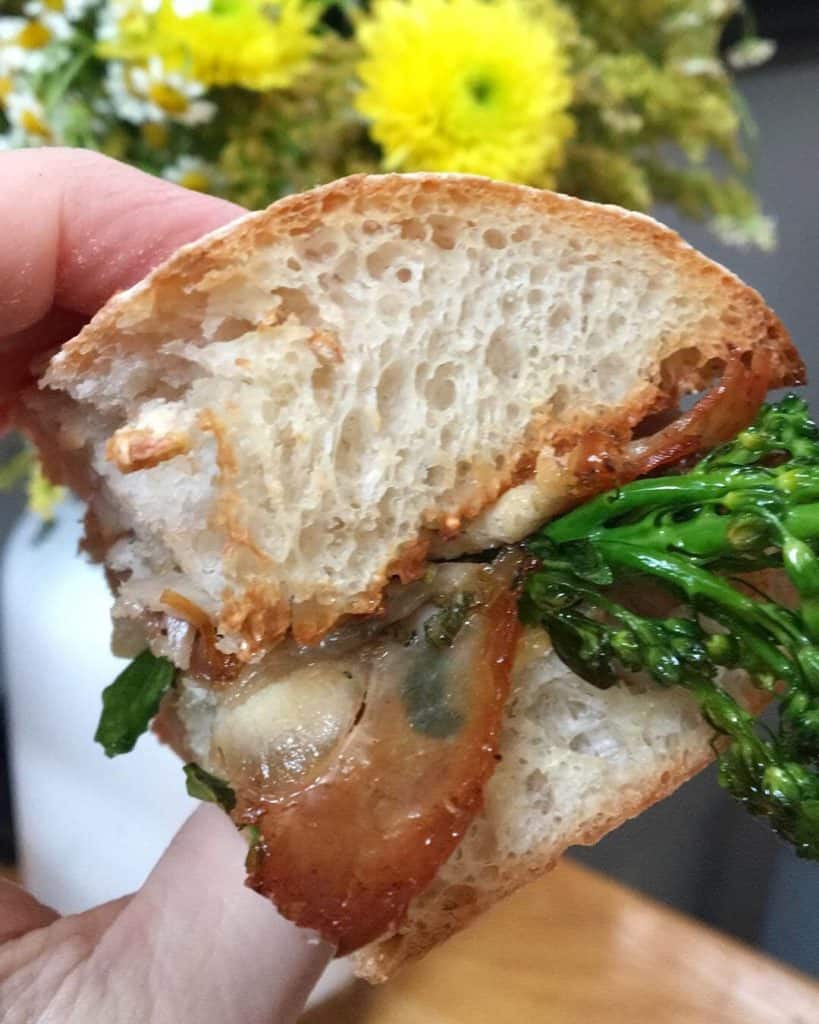
It’s easy to see the benefits, but one of the downsides is that it only reinforces one’s high standards for Italian food and drink to the degree that we’re often disappointed elsewhere. One simple example is when I have porchetta. Thankfully, this porchetta and rapini panino in New Zealand passed the test, as did most of the food there.
You may recall my post about visiting Orvieto from last year. If you do, you may also remember that I shared photos of the best porchetta panino that my mother and I had ever tasted, despite the bread having no salt, as is the tradition in this region.
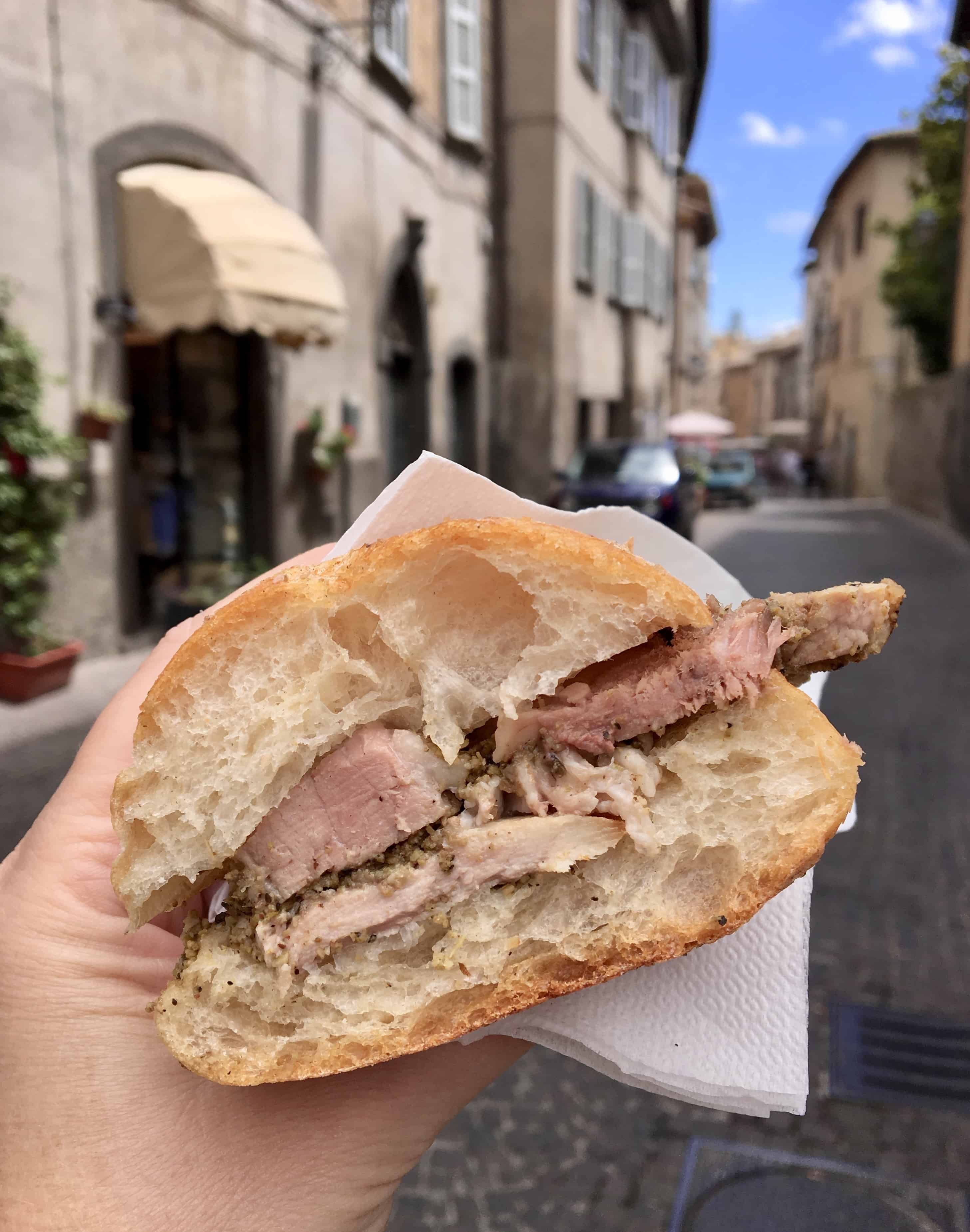
We were concerned we might not like the panino (because of the unsalted bread), but our trepidation was all for naught. After we took our first bite, we both looked at each other, and knew we’d make the right call! It was incredibly delicious, and so full of flavor. Mum and I still talk about that sandwich (from a butcher shop, of all places).
EDITED 11/2025: we’ve both returned separately, since our first visit, and brought friends and can confirm, the porchetta is still just as good as we remembered!
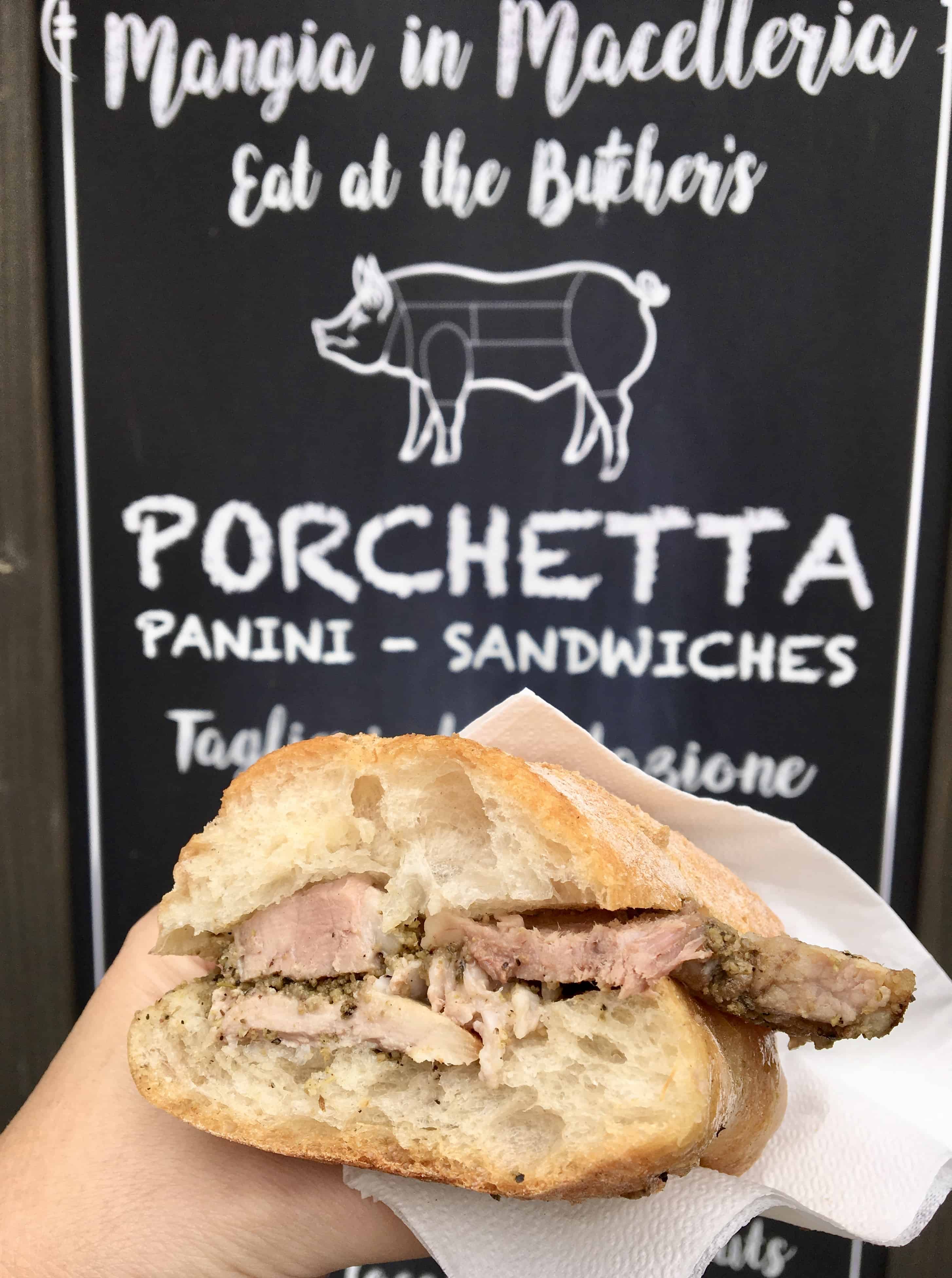
Luckily, I went inside after finishing every last morsel of that pork sandwich to ask details on how they made it. The primary flavoring was a lot of fennel pollen which they happened to sell in little test tube containers. I bought one with the intention of attempting to recreate this porchetta at home in Los Angeles, and I did!
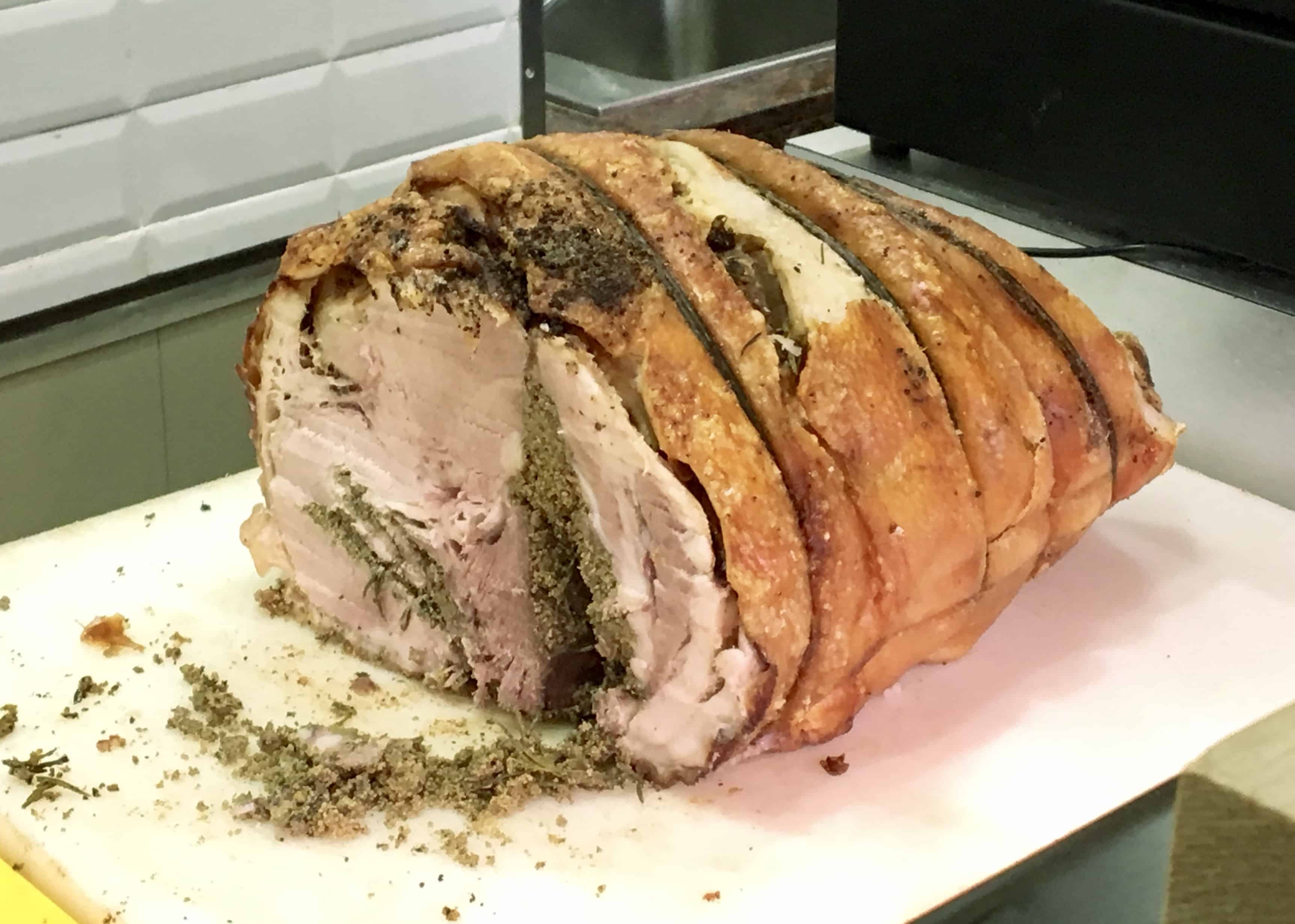
The amount of fennel pollen in the test tube wasn’t nearly enough to season the size of my porchetta in the manner that the butcher in Italy had, but it was still phenomenal! To be fair, this is isn’t an inexpensive meal to make, but when you consider the price per serving, it’s not bad at all as it will make loads of panini if you use an 8-10 lb piece of pork.
Another delicious pork sandwich: mortadella panino.

You’re probably sick of hearing me say this, but I can’t not say it: the quality of the handful of ingredients used for this porchetta is the key to outstanding results. Porchetta is easy to make, but you need the proper ingredients.
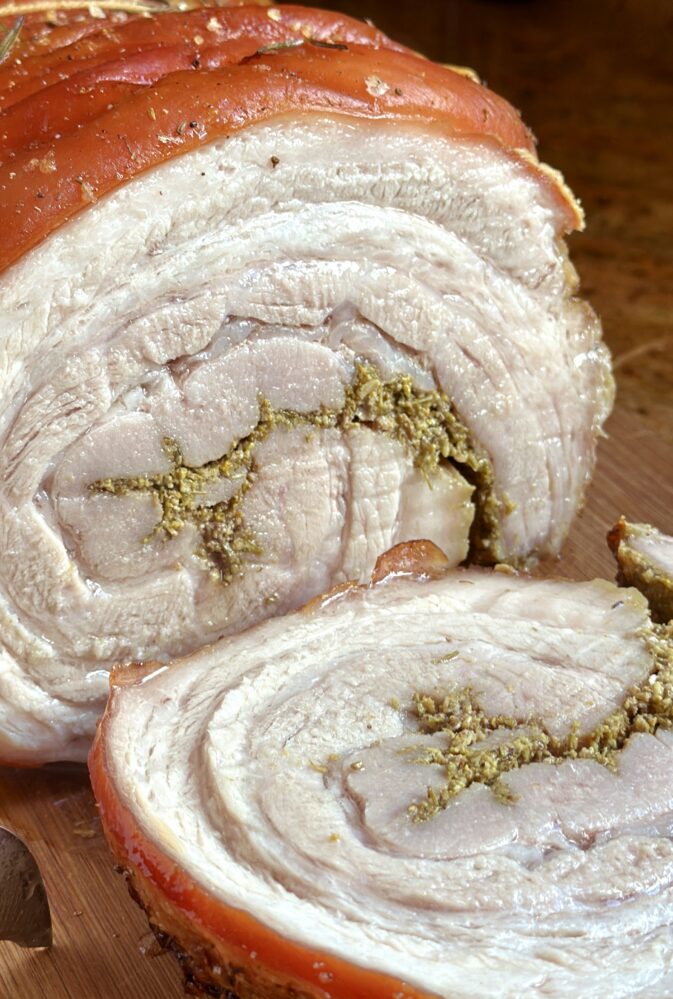
This is the most important part of the recipe–honest–buy good meat. I bought my pork at a really great butcher here in LA. Scroll down for the printable recipe if you don’t need to know any more about porchetta.
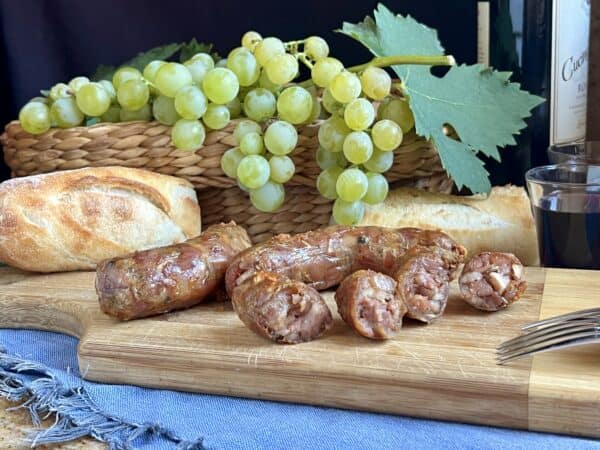
Love all things “pork”? Try this nose to tail style Italian cotechino sausage recipe.
What is Porchetta?
Literally translated, porchetta means “little pig”. In Italy, porchetta can refer to a roasted whole suckling pig, an older pig, or just the pork belly roll, “porchetta tronchetto” (which is what I’ll be showing you how to make). No matter what type of porchetta, there is always one common thread: the rind is always included.
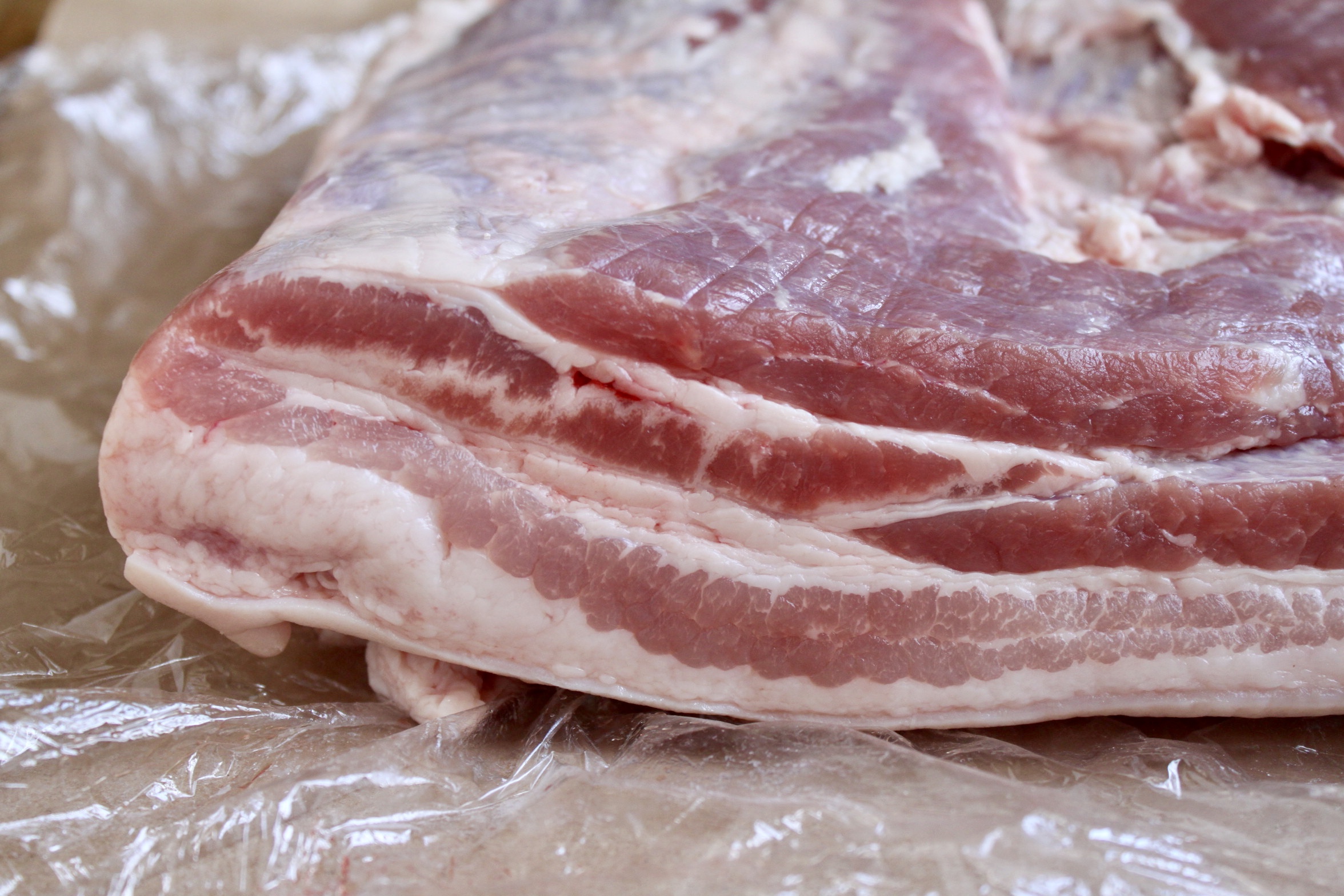
What Cut of Meat is Used for Porchetta?
Pork belly is used in making this type of porchetta (when it’s not a whole suckling pig). The butcher will cut it so that it’s ready for you to roll into shape, if he/she is familiar with porchetta. You may be advised to use a different cut of pork, but this is not going to give you the same tender results. Italians know what they’re doing with their traditional dishes; advice from non-Italian sources will often lead you astray.
NOTE: pork loin is not good for porchetta as it’s too lean and has no skin.
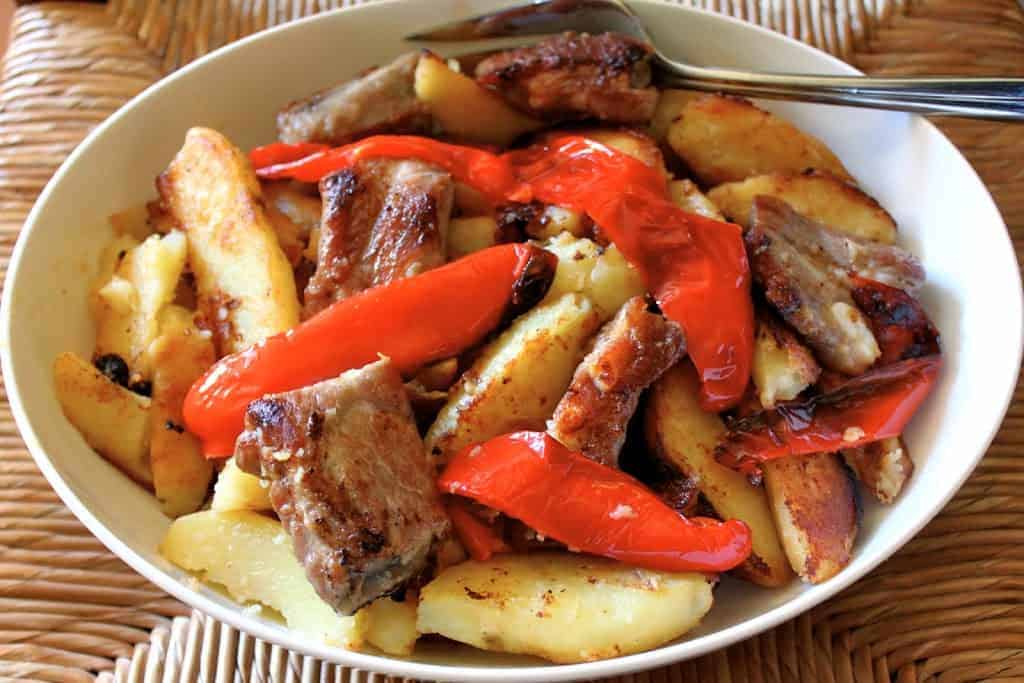
Pork, pickled peppers and potatoes: an Italian classic from Lazio.

Is Porchetta the Same as Pork Belly?
No, as stated above, porchetta can be an entire pig, so sometimes it’s not the pork belly. However, if it’s pork belly, part of the loin is included, too.
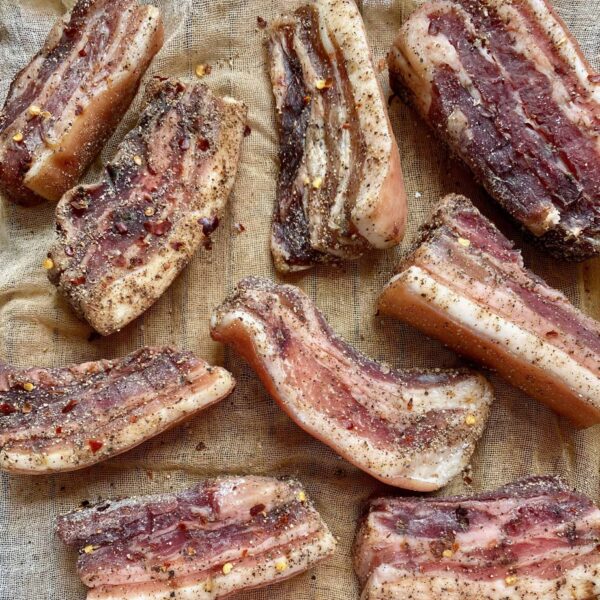
What is the Difference Between Porchetta and Pancetta?
As described above, porchetta is a type of roast pork, but pancetta is cured pork belly. Porchetta is cooked, pancetta is cured. You can read my post on how to make pancetta, too.
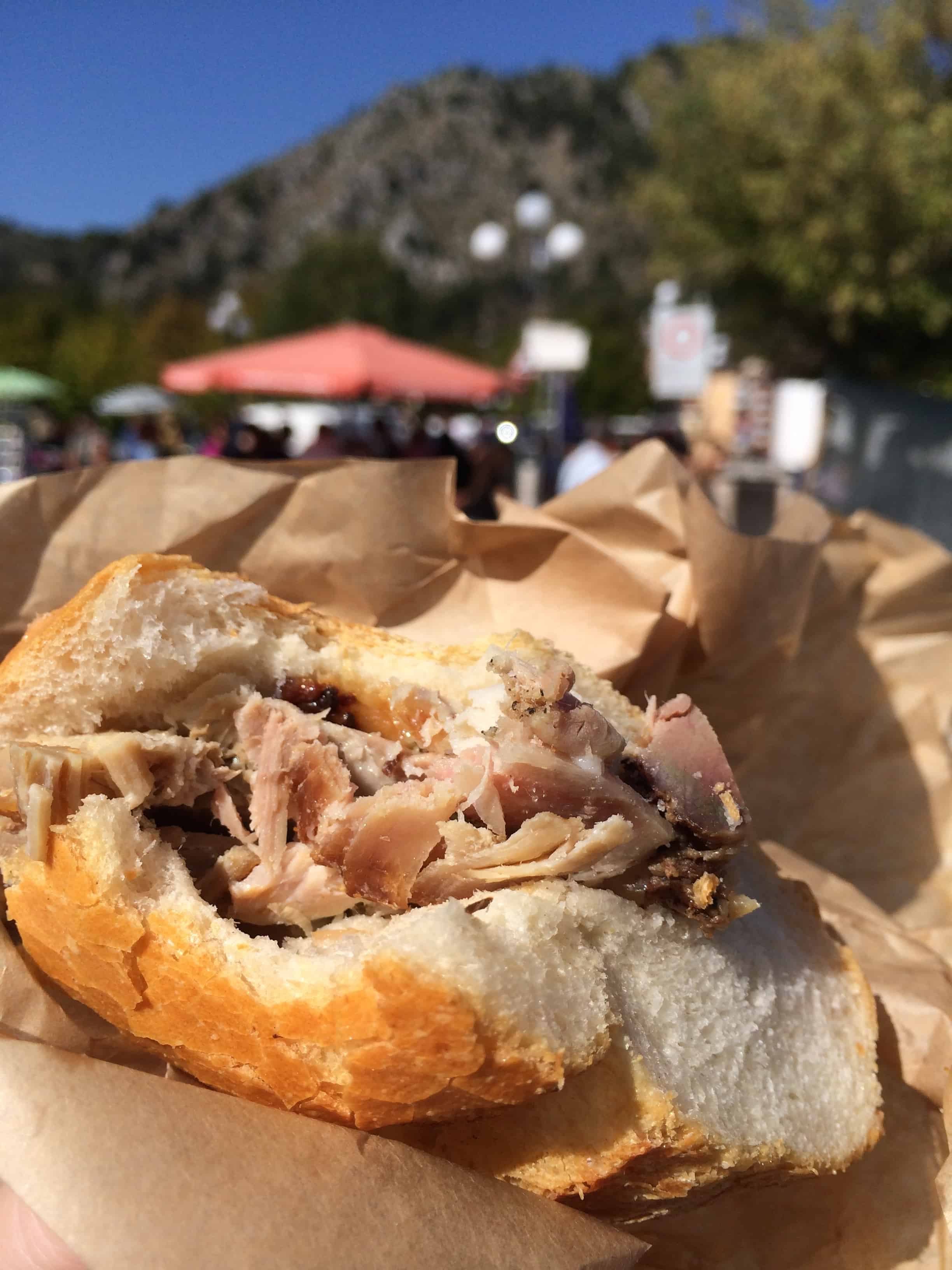
What do Italians eat with Porchetta?
When I saw the misinformation given on another website, I imagined that this person has never even been to Italy! Porchetta is normally served on bread, in a panino with nothing else! No sauces, lettuce, tomato, pickles, salsa verde, chimichurri, NO GRAVY, or side dishes–NOTHING. This is because the flavor of the pork is so insanely good, that’s what we want to taste! It makes so much sense when you realize how flavorful everything is.
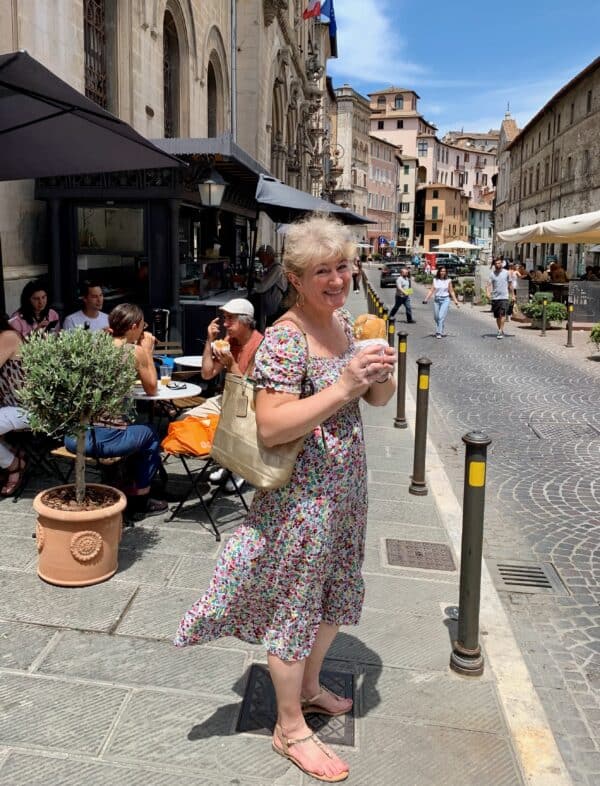
When it comes to serving porchetta in a panino (sandwich, one Italian website about porchetta wrote something loosely translated to this: “We recommend not to make any “Americana” like putting barbecue sauce on the sandwich.” I concur, and advise you not to add anything else with the porchetta in the bread. Just resist the temptation and see what you think! (If you use this recipe for porchetta and use good quality ingredients, you won’t need anything in your sandwich.)
What to Serve with Porchetta
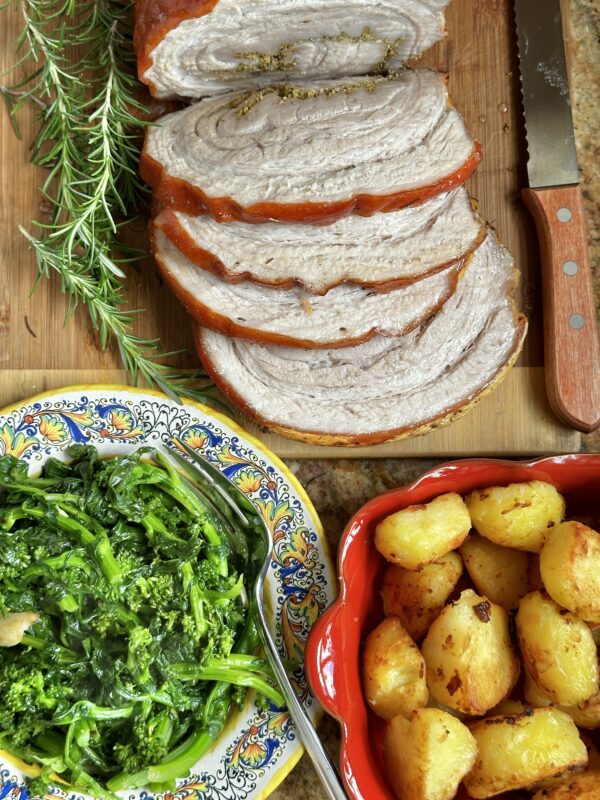
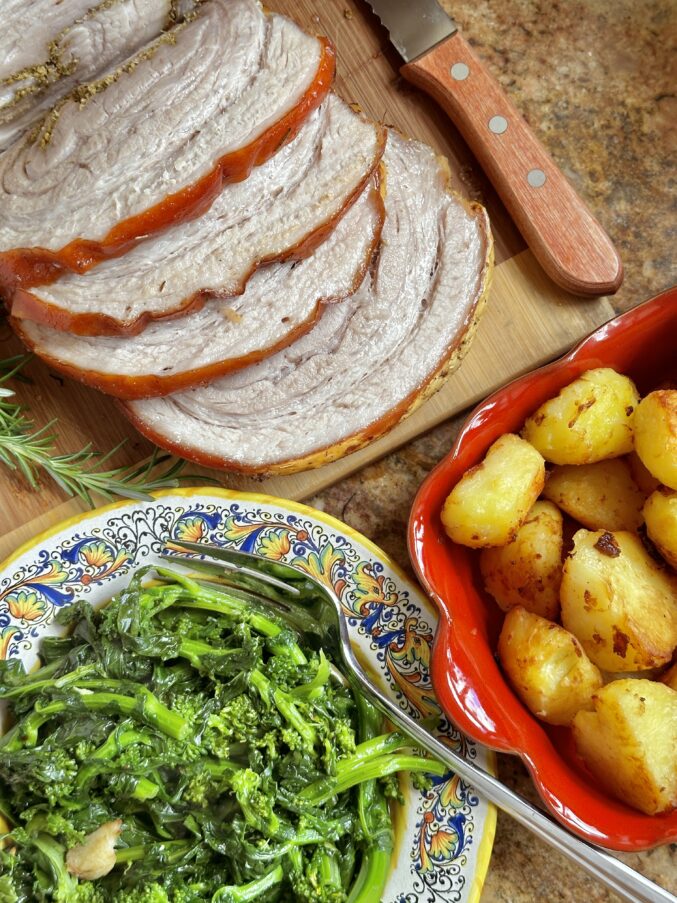
What to serve with porchetta? Absolutely nothing but bread! If you want to keep it authentic, do not serve porchetta with any side dish. However, if you want to serve it as a sit down meal, rapini and roast potatoes both go really well with the slices of this roasted pork.
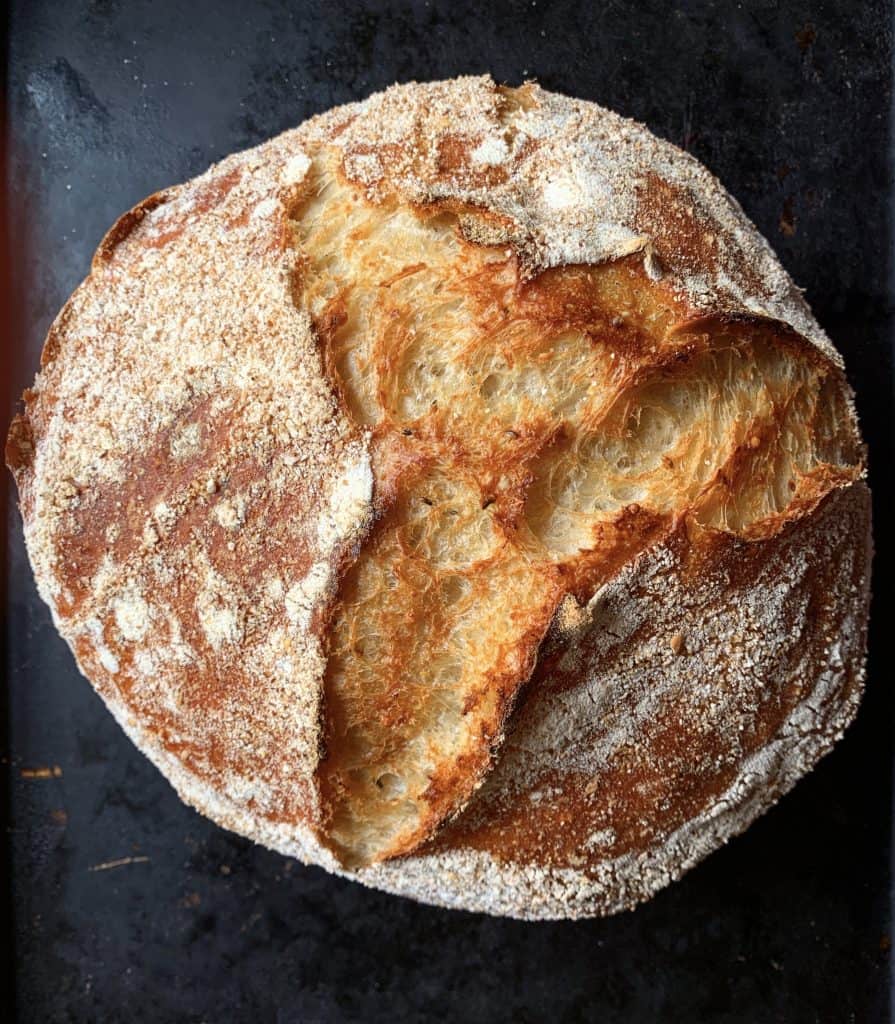
What Type of Bread is Used with Porchetta?
As long as you use a really good quality, Italian-style bread, you’ll be fine. If you are in certain parts of Italy, porchetta is served in a panino/sandwich using their unsalted bread (like the one I had in Orvieto). However, the most important thing about the bread is that it’s either homemade or very good quality. An Italian site recommends, that this “street food delight” is “to be eaten standing up only”. However, their most critical requirement is that homemade bread is used.
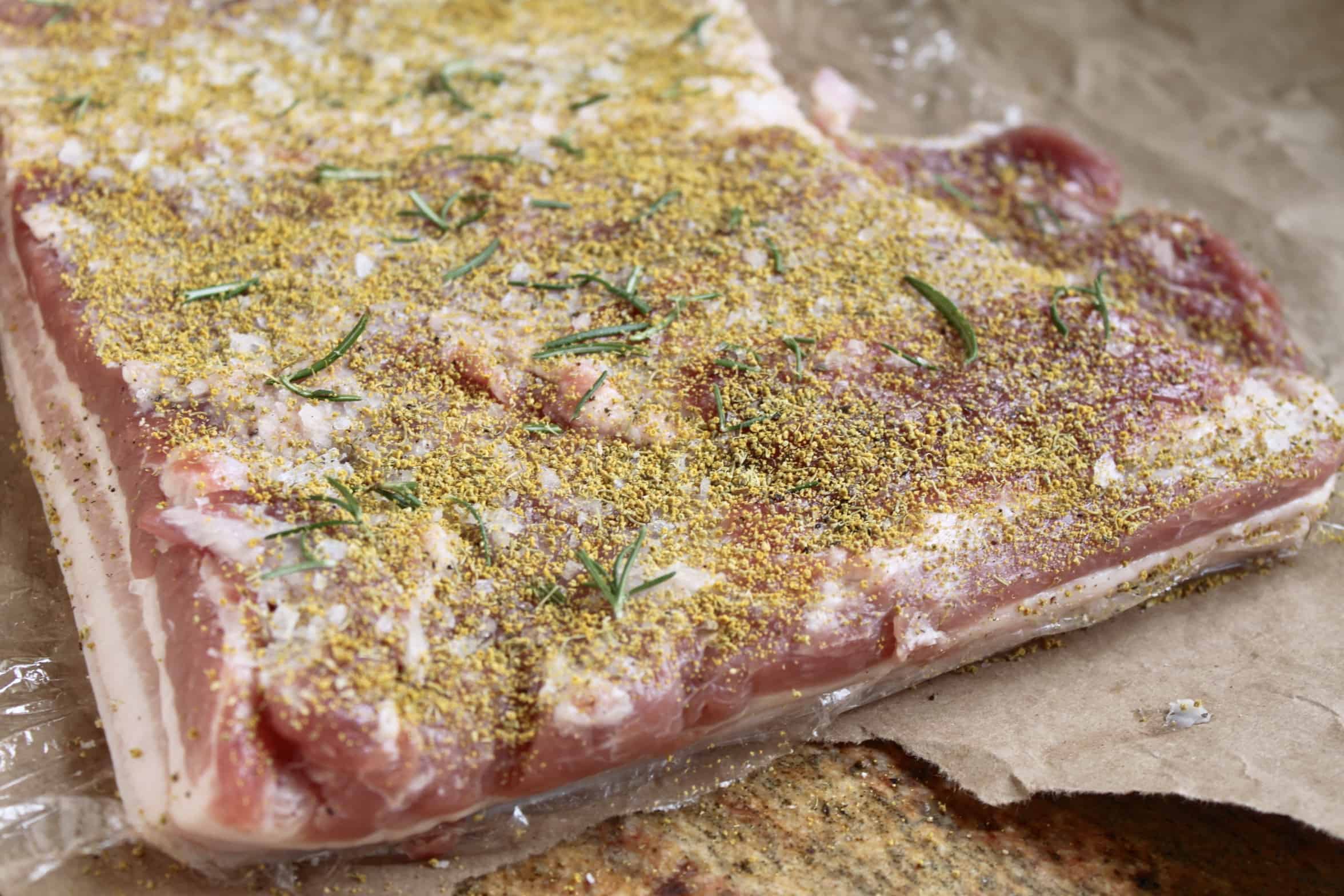
How to Make Porchetta?
Glad you asked! It’s truly super easy, and only takes a minimal of ingredients and a few steps! Weights and amounts are not critical, so please don’t stress on exact measurements.
Is Porketta the Same as Porchetta?
There is no such word as “porketta”; it is “porchetta” spelled incorrectly. Ch in Italian sounds like “k”.
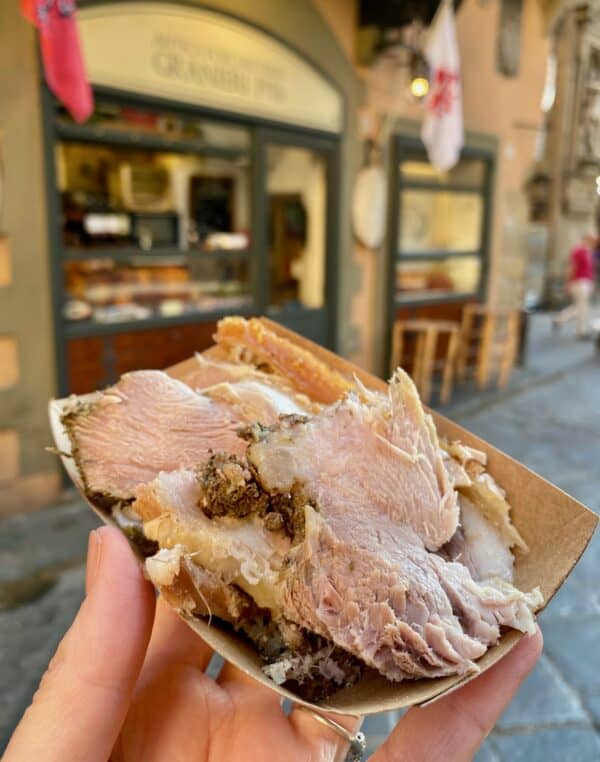
Do I need Fennel Pollen to Make Porchetta?
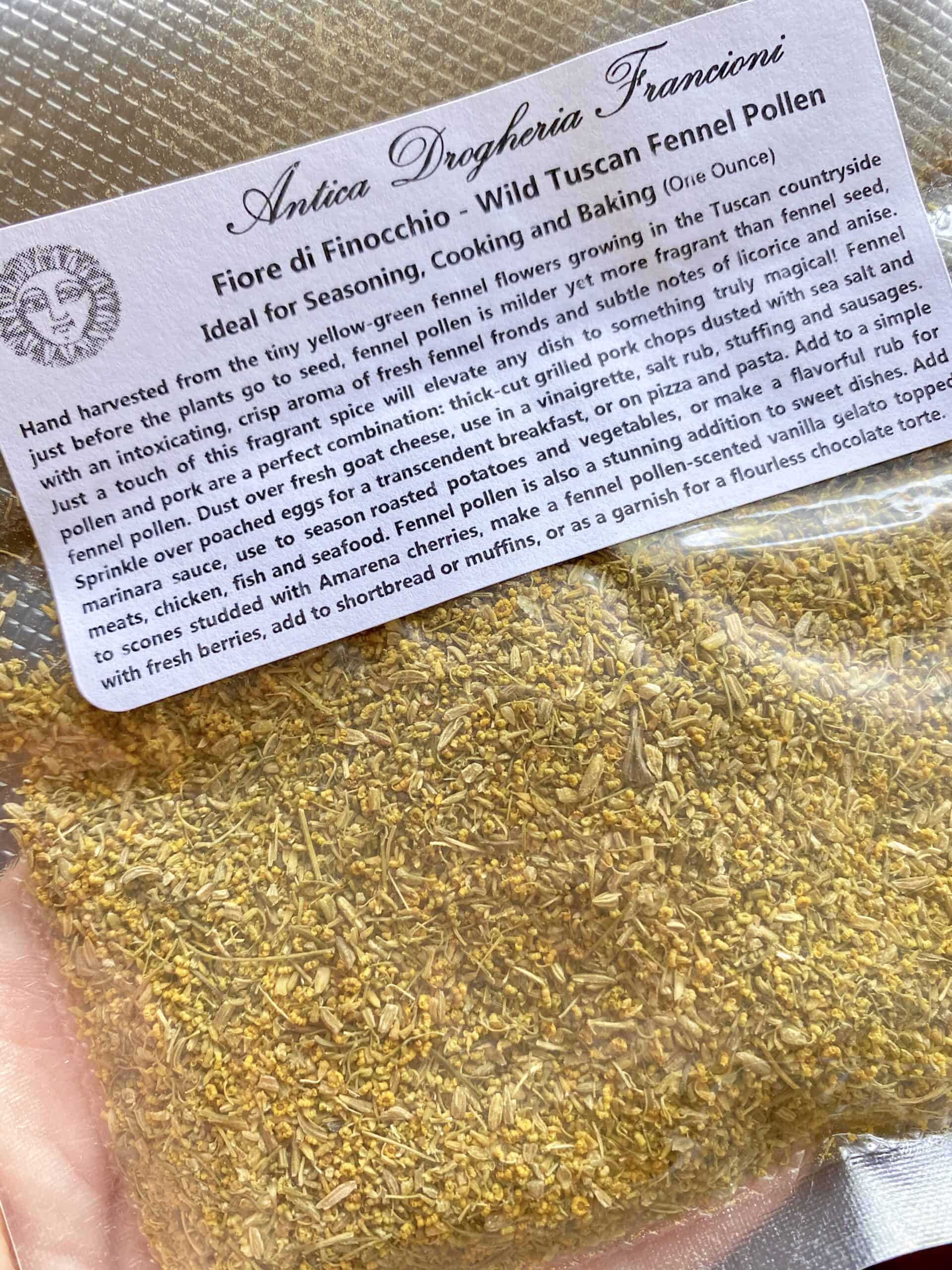
It really is a key ingredient to make it in an authentic Tuscan Italian manner, but it’s expensive and may be difficult to find. There really is no substitute since fennel/fennel seed and fennel pollen taste very different from one another. I managed to find this wild Tuscan fennel pollen at a gourmet shop near me. I’ve linked to a famous butcher’s brand below, but this one is a bit more and almost twice as much organic fennel pollen.
Pork, pickled peppers and potatoes – another authentic Italian recipe to try.
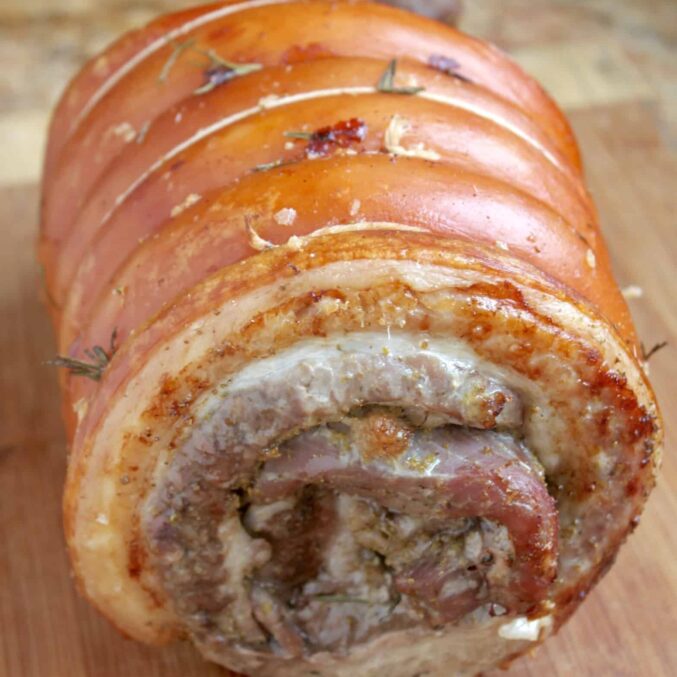
I wish I could add the aroma of this gorgeous piece of pork to the photo!
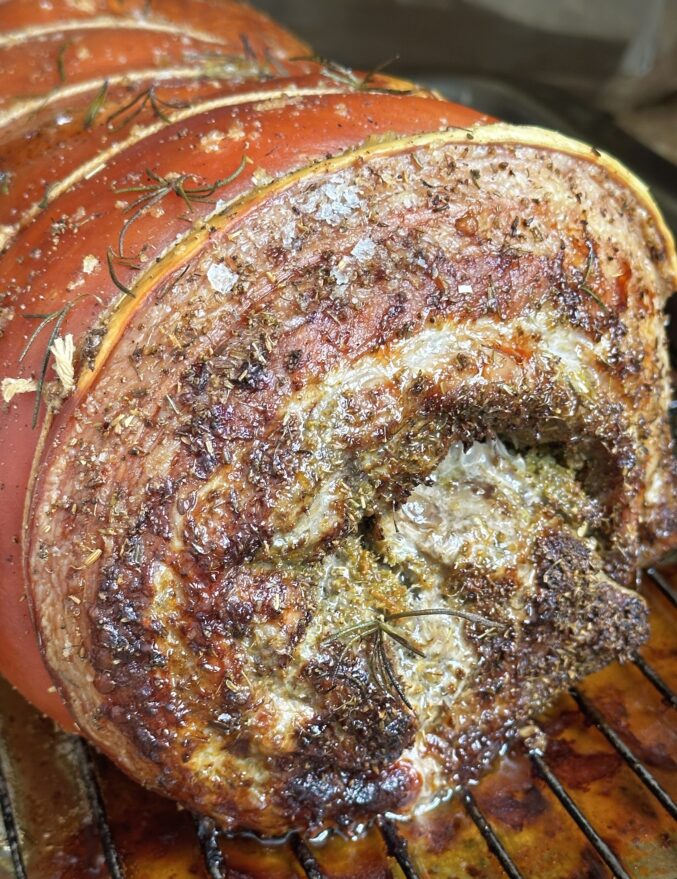
Isn’t this a thing of beauty?
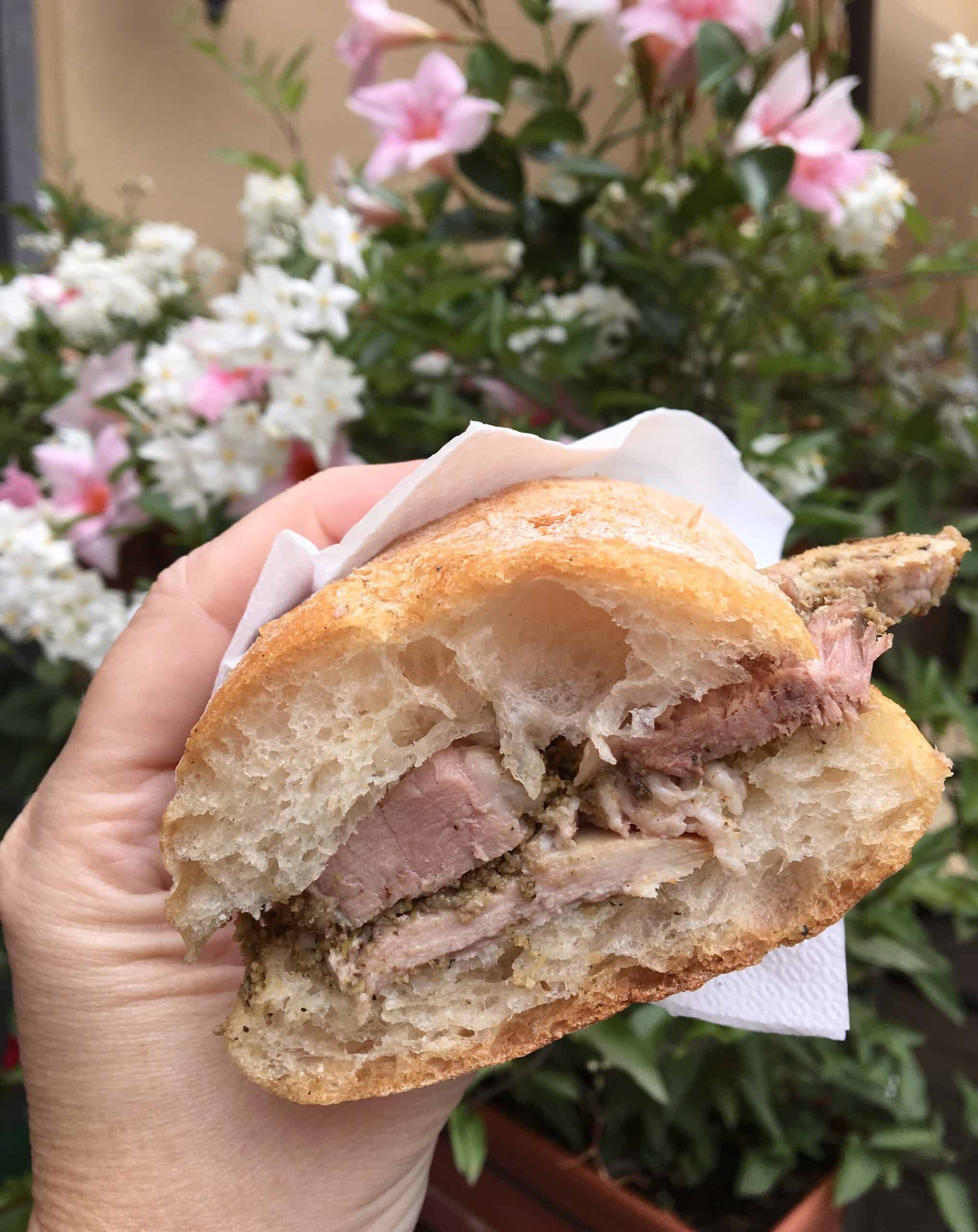
Authentic Italian Porchetta Recipe
FULL PRINTABLE RECIPE BELOW
Inspired by Bottega Roticiani Butcher in Orvieto serves about 20 or more
Ingredients
- one fresh, pork belly roast with the skin (ask your reputable butcher) weighing 8 to 10 lbs
- Kosher or sea salt (I used Maldon)
- fresh or dried rosemary
- fresh garlic
- wild Tuscan fennel pollen (if you can source it) at least 1 oz, but as you can see, more is better in this case (it is expensive, though) this brand is from Italy’s most famous butcher, (but I bought some locally at a much more reasonable price)
- freshly ground black pepper
- good quality extra virgin olive oil
- Crusty Italian bread or rolls (panini) for serving
Special equipment: butcher’s twine and a large tray with rack
Directions
Prepare the Meat
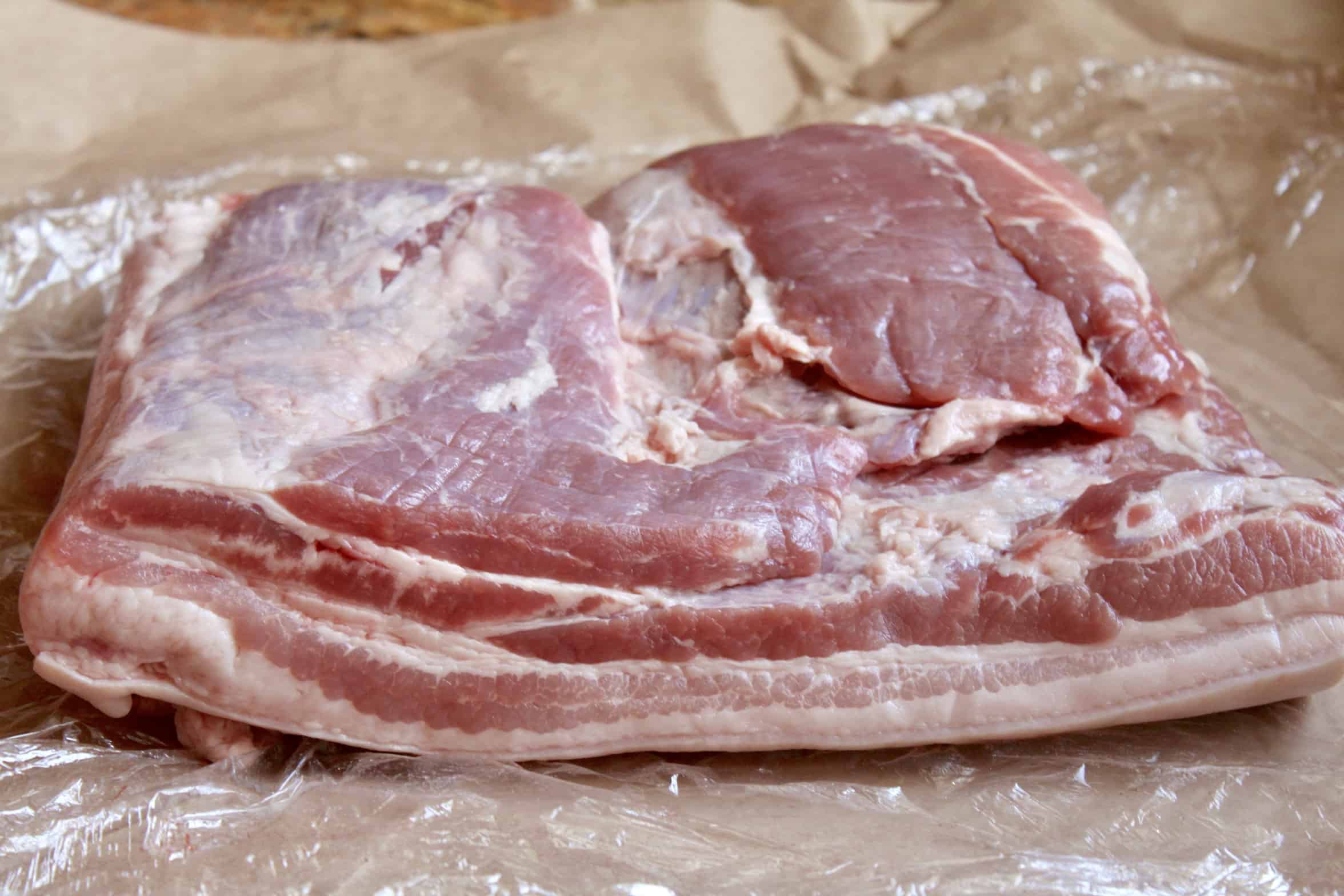
Open the piece of pork onto the butcher paper or clean countertop, skin side down.
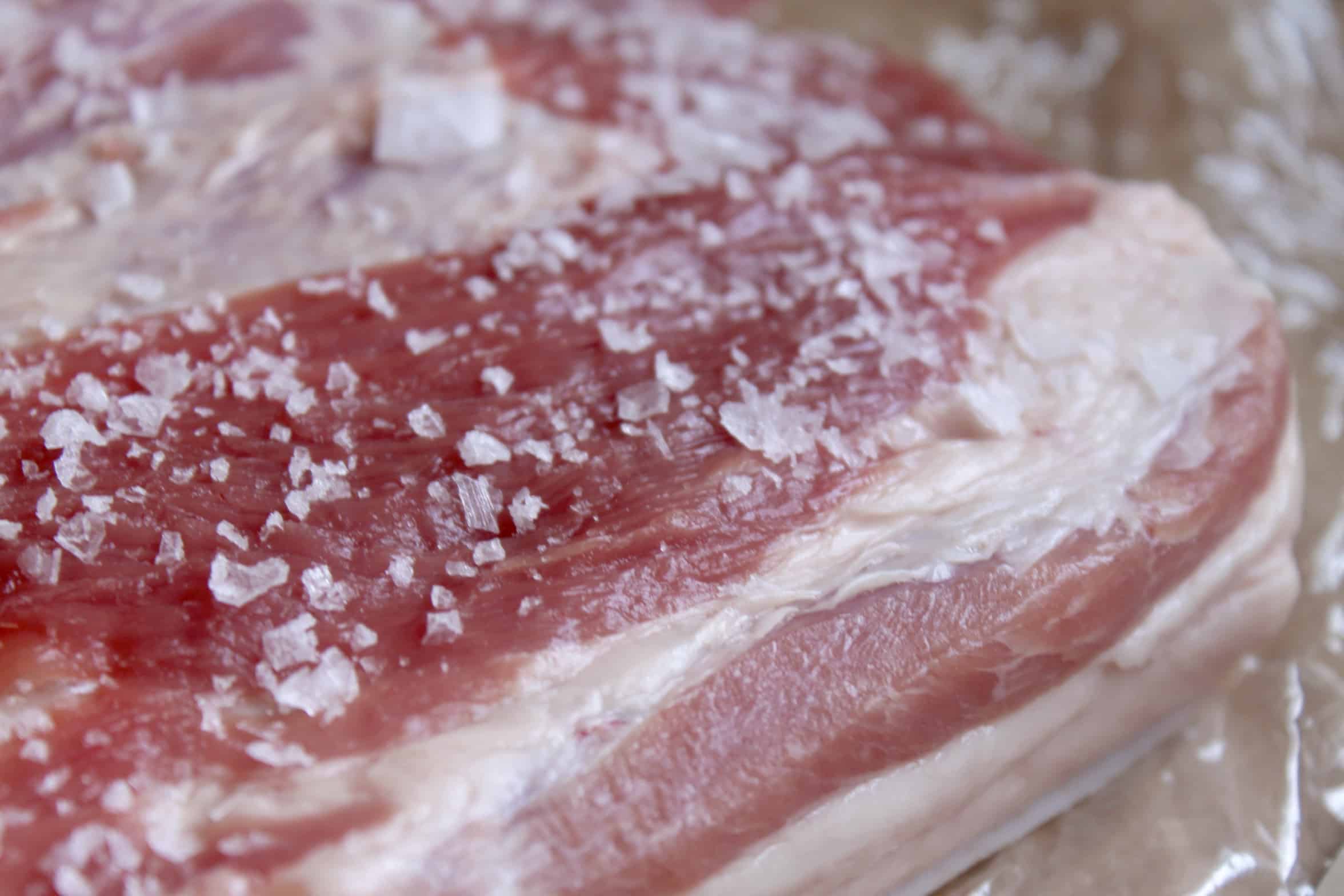
Sprinkle generously with the salt.
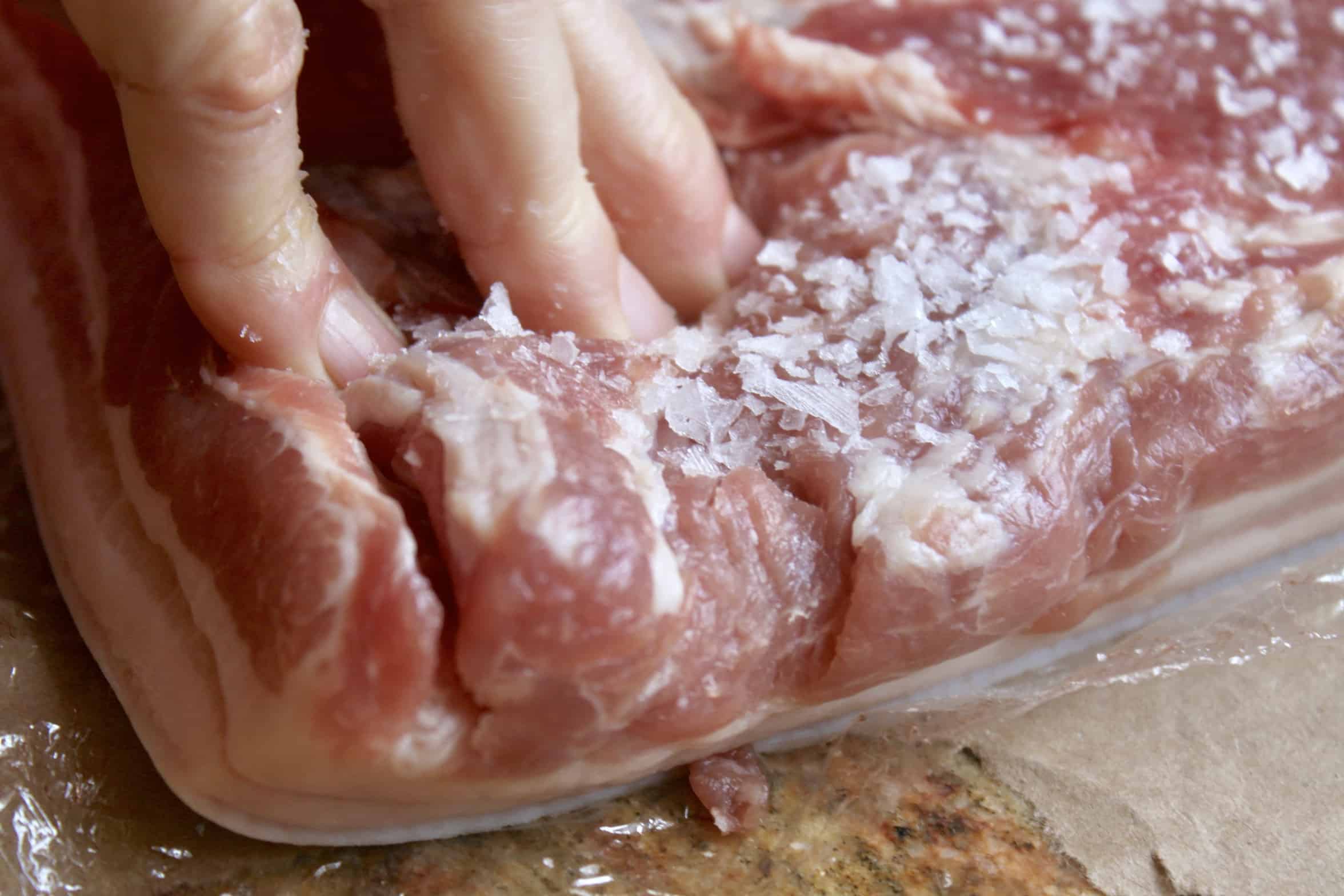
Then work the salt into the pork.
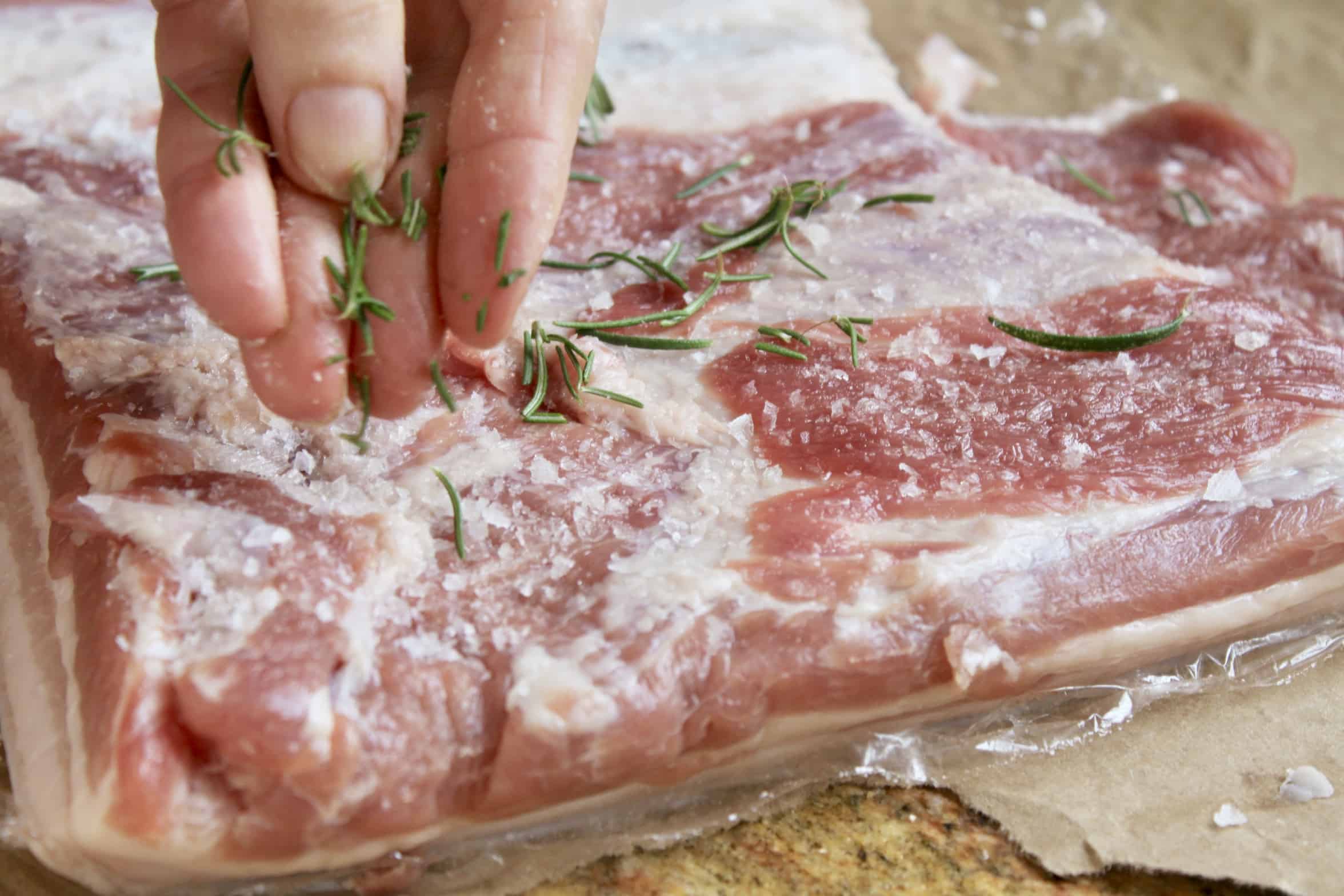
Next, add the rosemary and crushed garlic. We used fresh rosemary as I have a bush in my garden. Whether you use dry or fresh, rub it and crush it between your fingers to release the flavor and oil. You can also use a mortar and pestle if you like. Rub the garlic over the porchetta, but add sparingly. Contrary to American understanding, most Italians don’t use a ton of garlic in their cuisine.
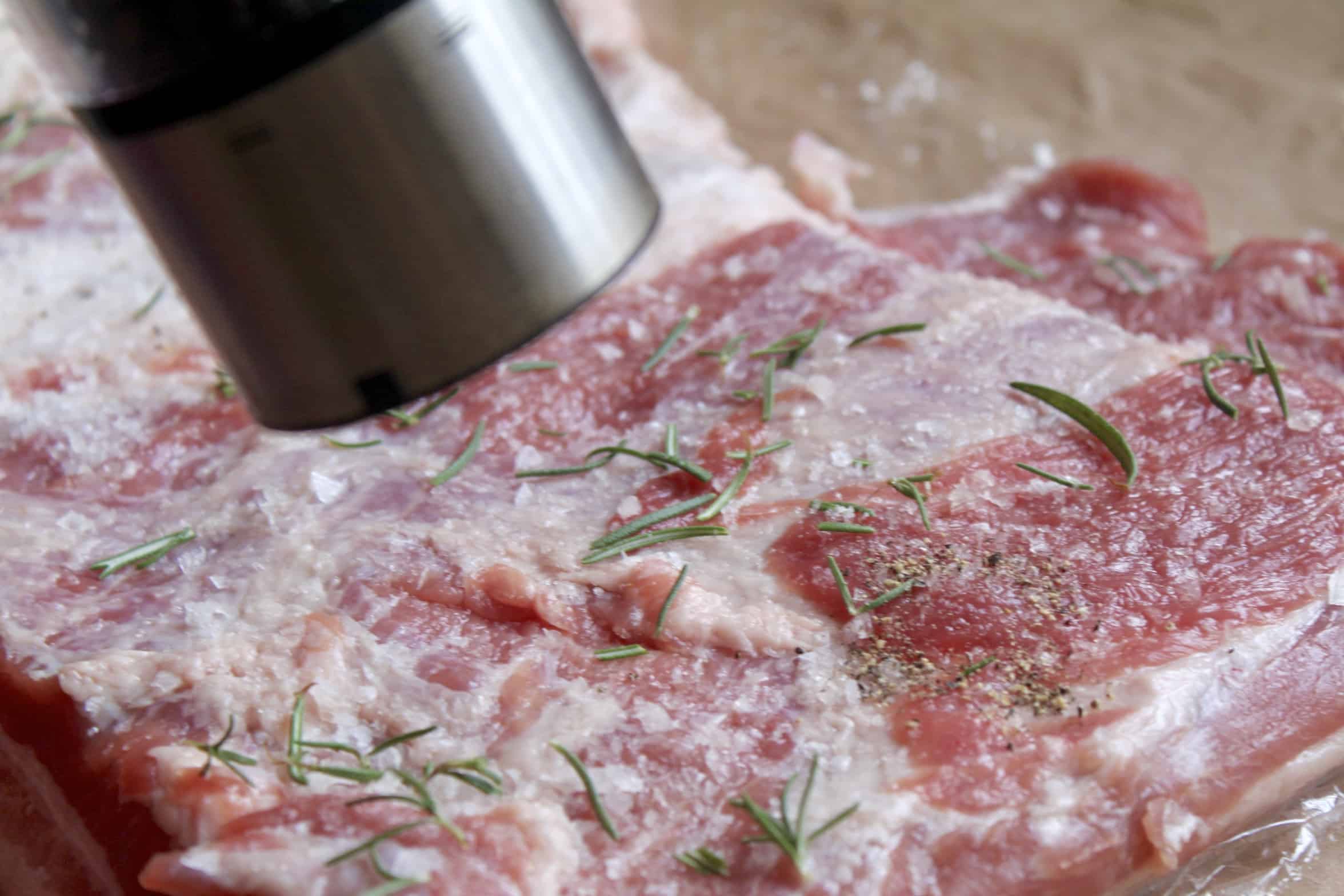
Add the freshly ground black pepper all over the porchetta.
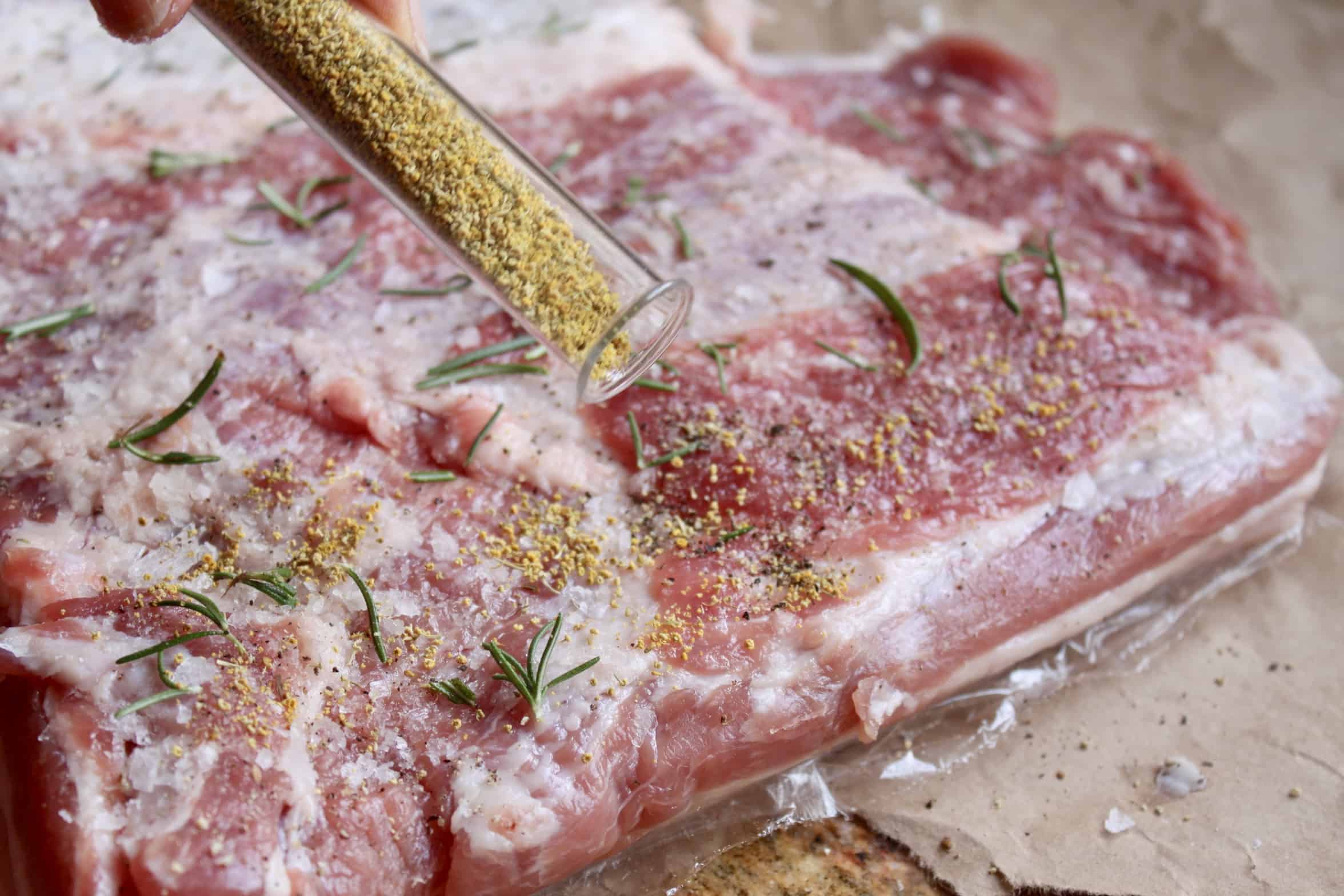
Now add the fennel pollen. Sprinkle evenly over the pork, but save a little of the pollen for after the porchetta has been rolled.
Roll the Pork Belly and Tie it.
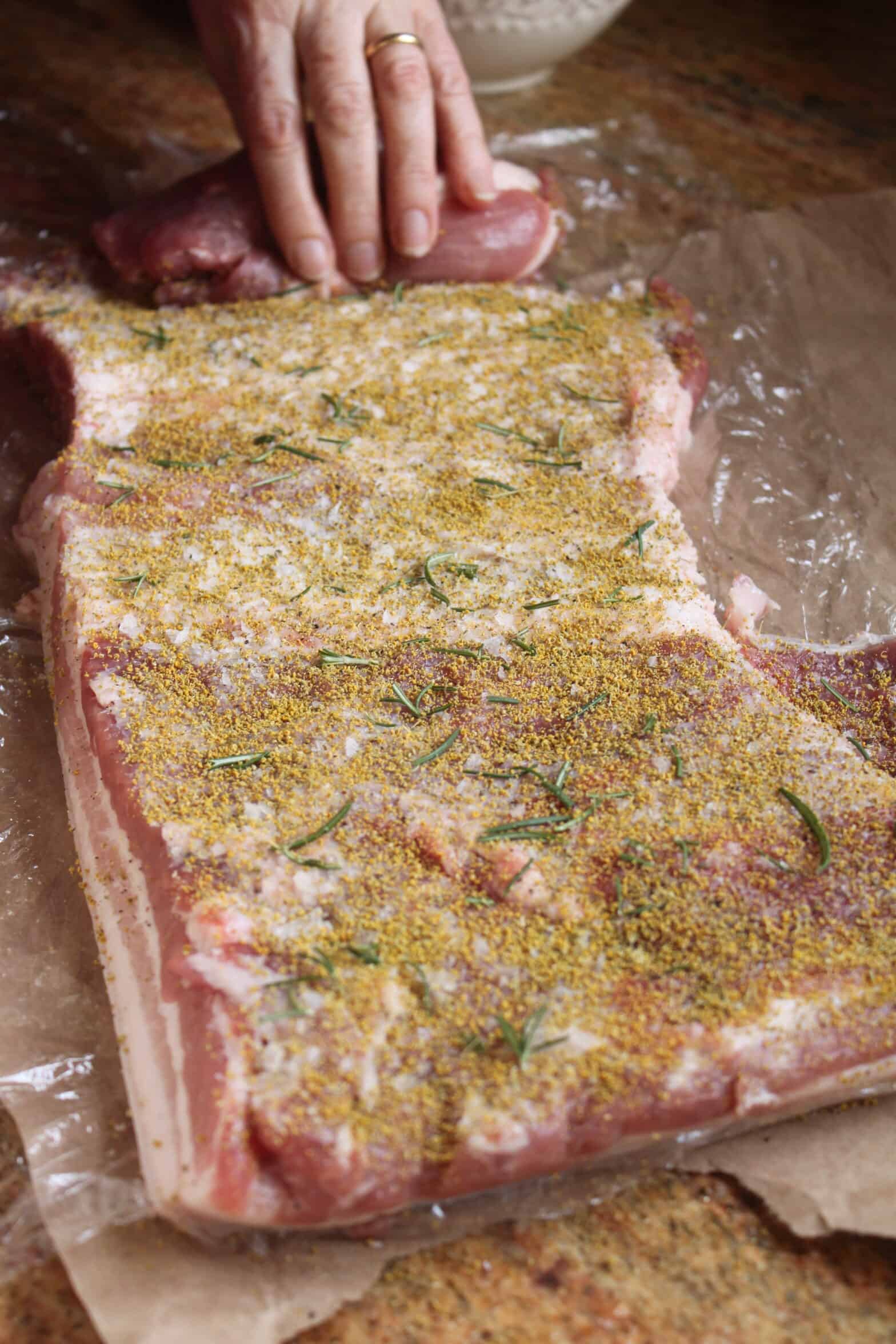
Roll it tightly.
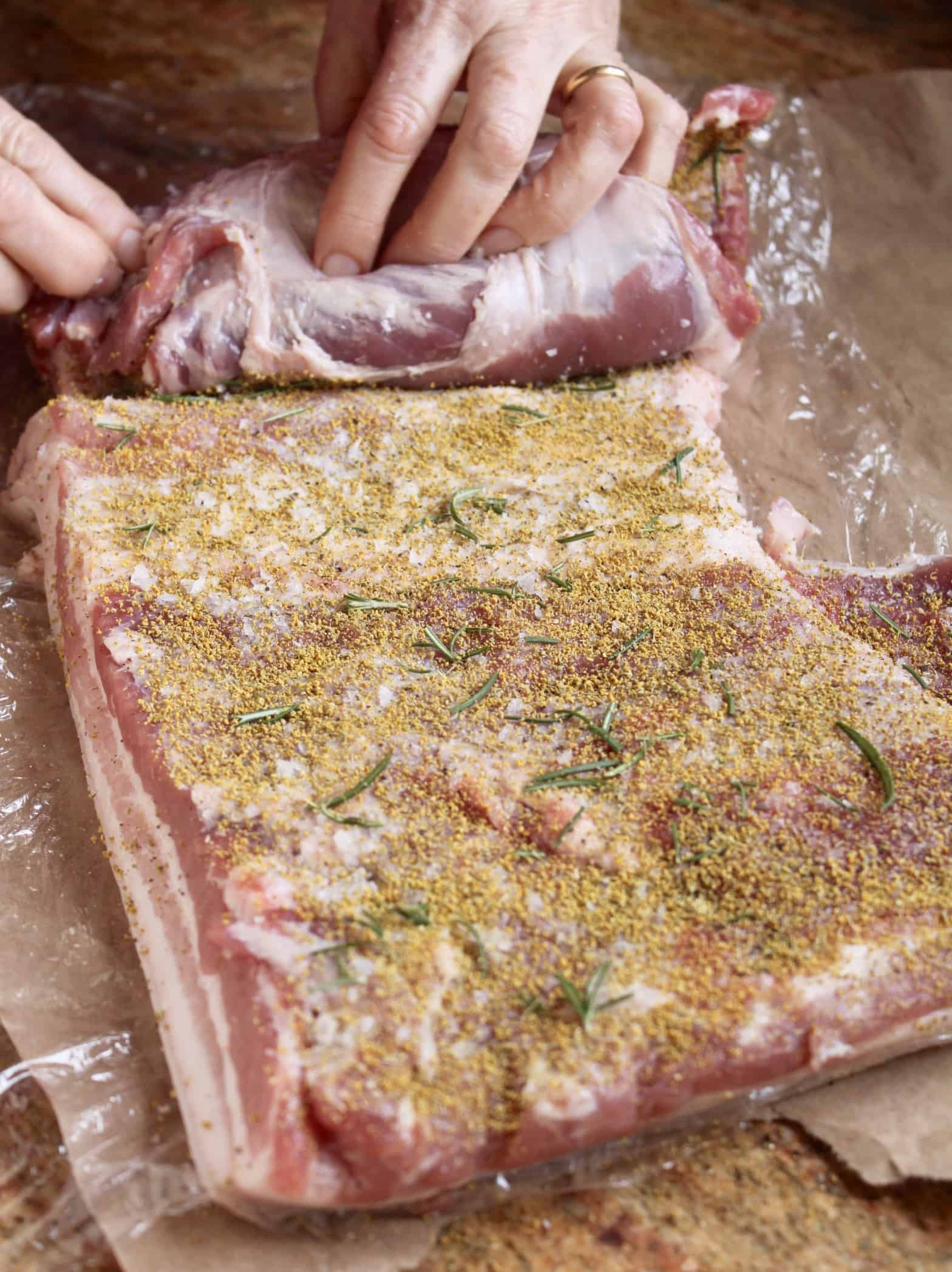
But as you roll it, sprinkly some salt onto the unseasoned side of the pork.
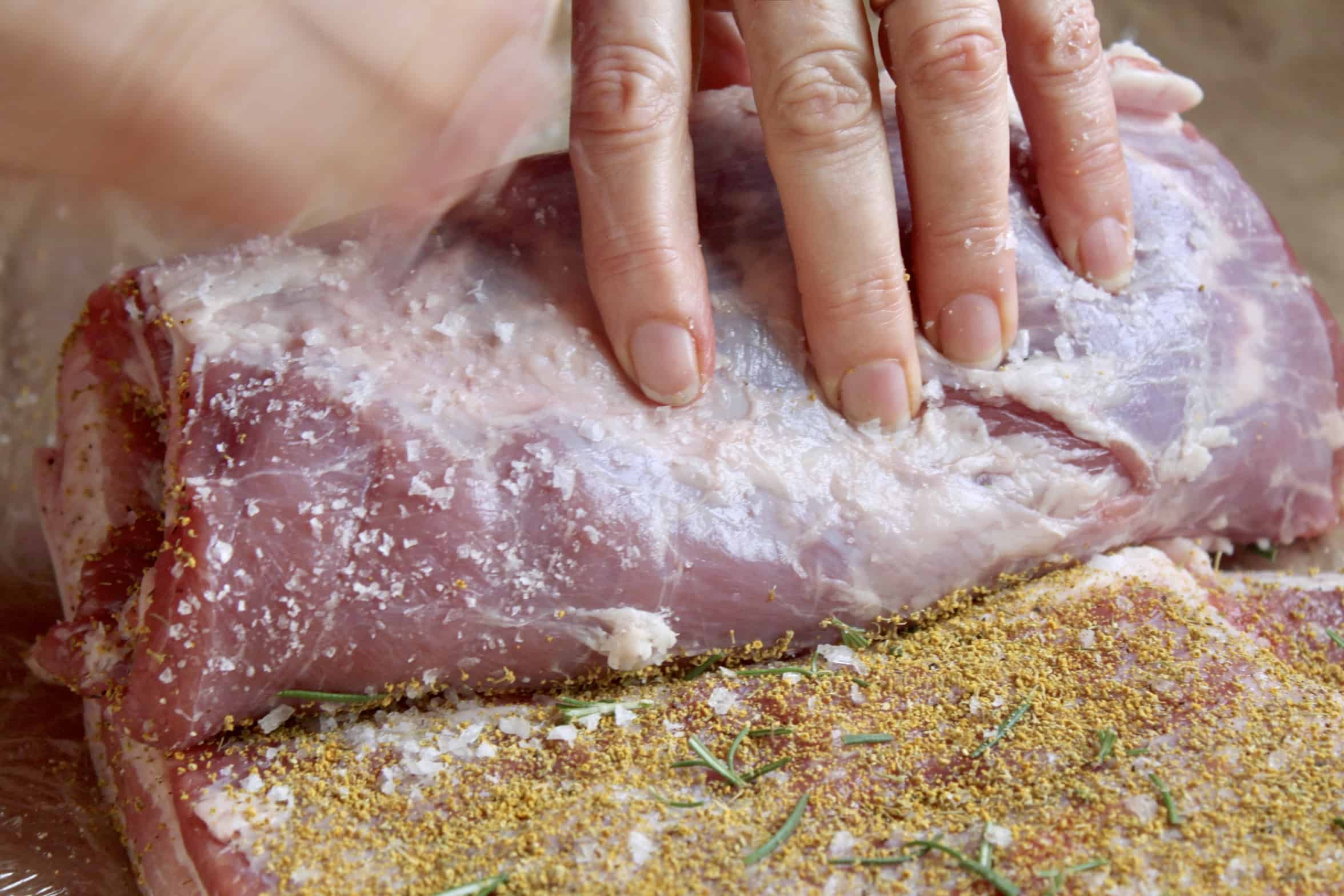
Continue rolling.
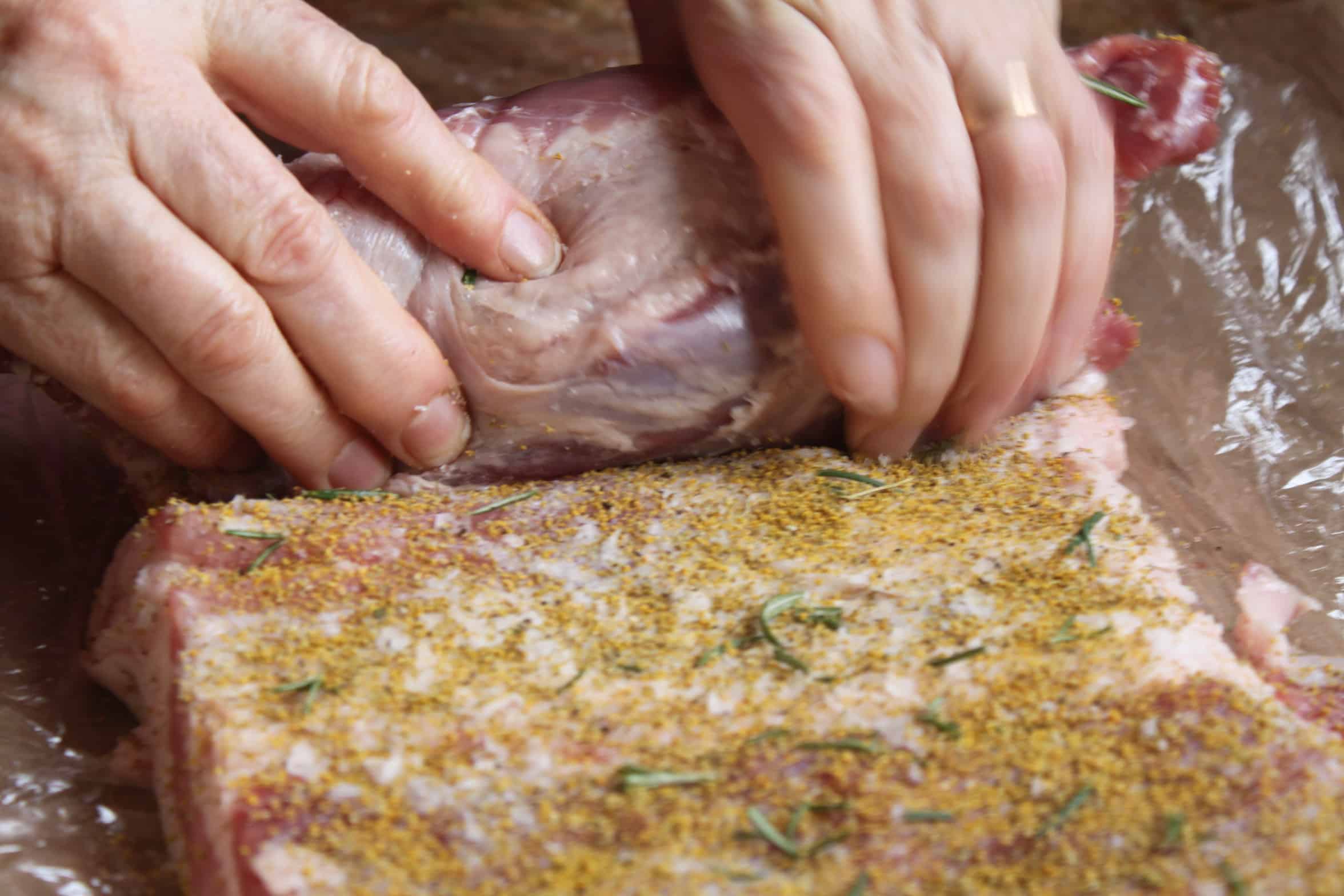
Until you reach the end.
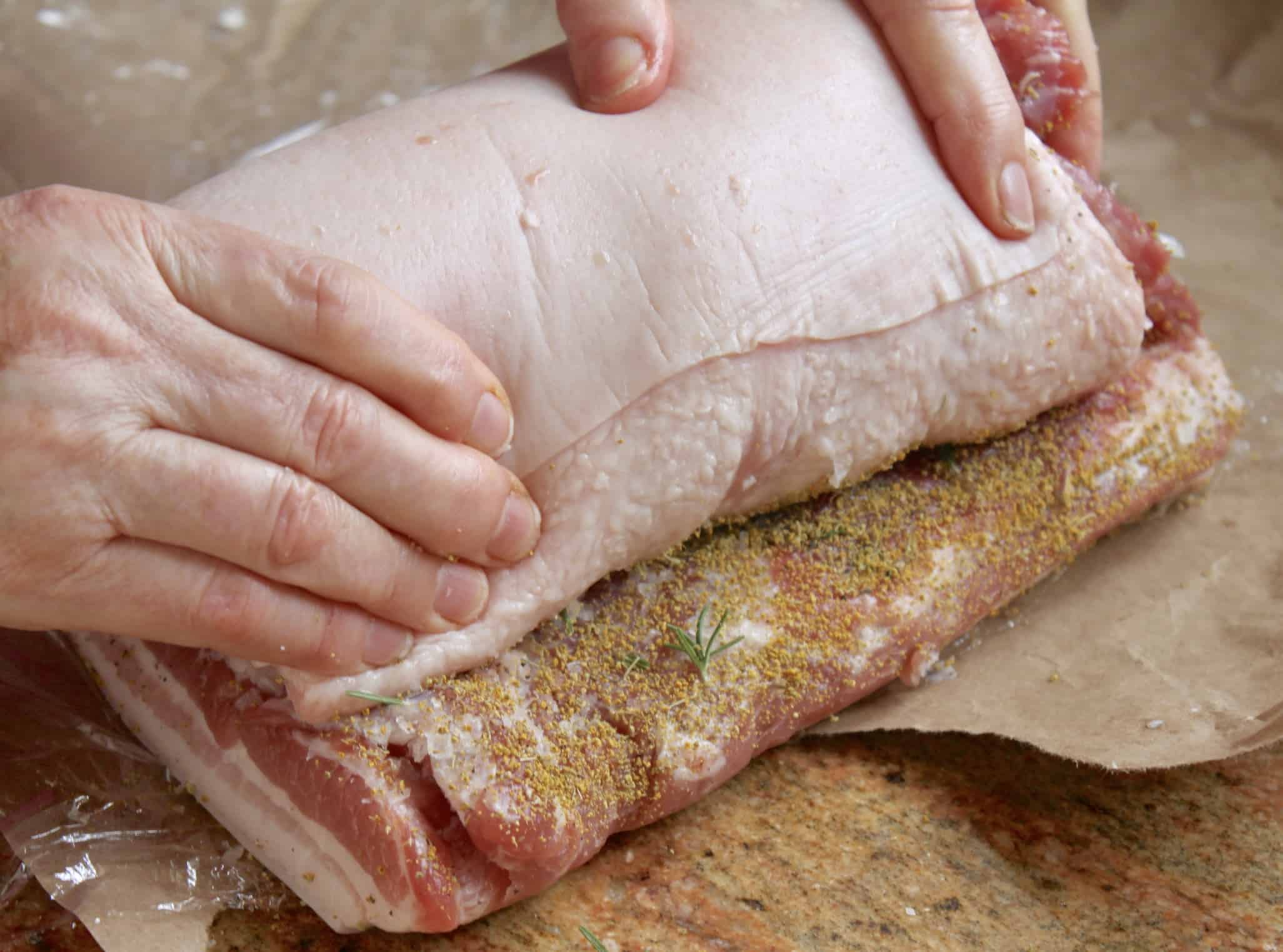
Keeping the seam side down, start tying the pork. Another pair of hands will make this part immensely easier. There’s no need for fancy ties or sailors’ knots, just wrap, double knot and cut.
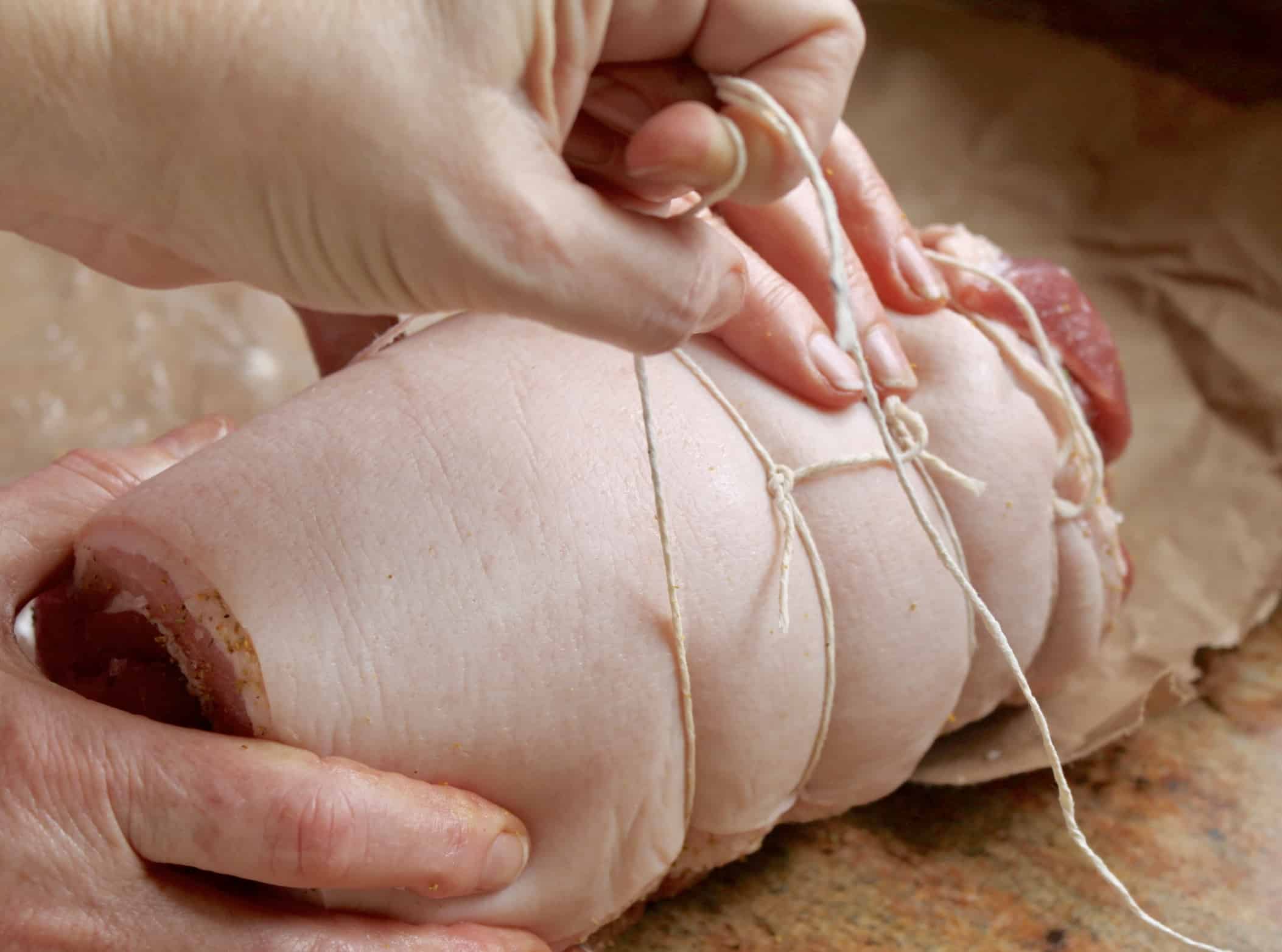
Repeat every few inches. The goal is only to keep the porchetta closed, so don’t tie it too tightly, either. As you can see, ours is far from perfect, but unless you’re serving the Queen of England, it won’t matter.
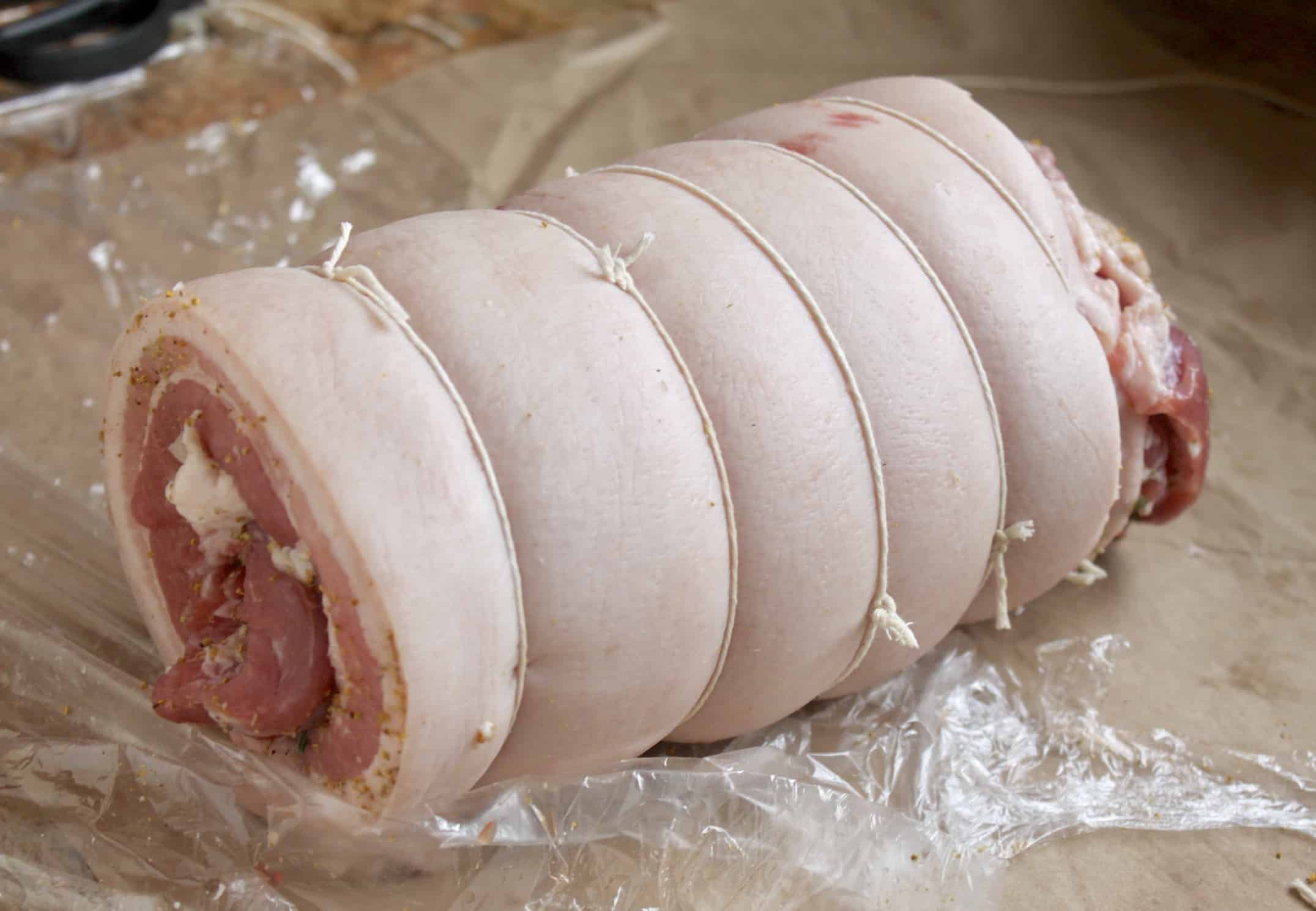
Finish the Preparation and Roast.
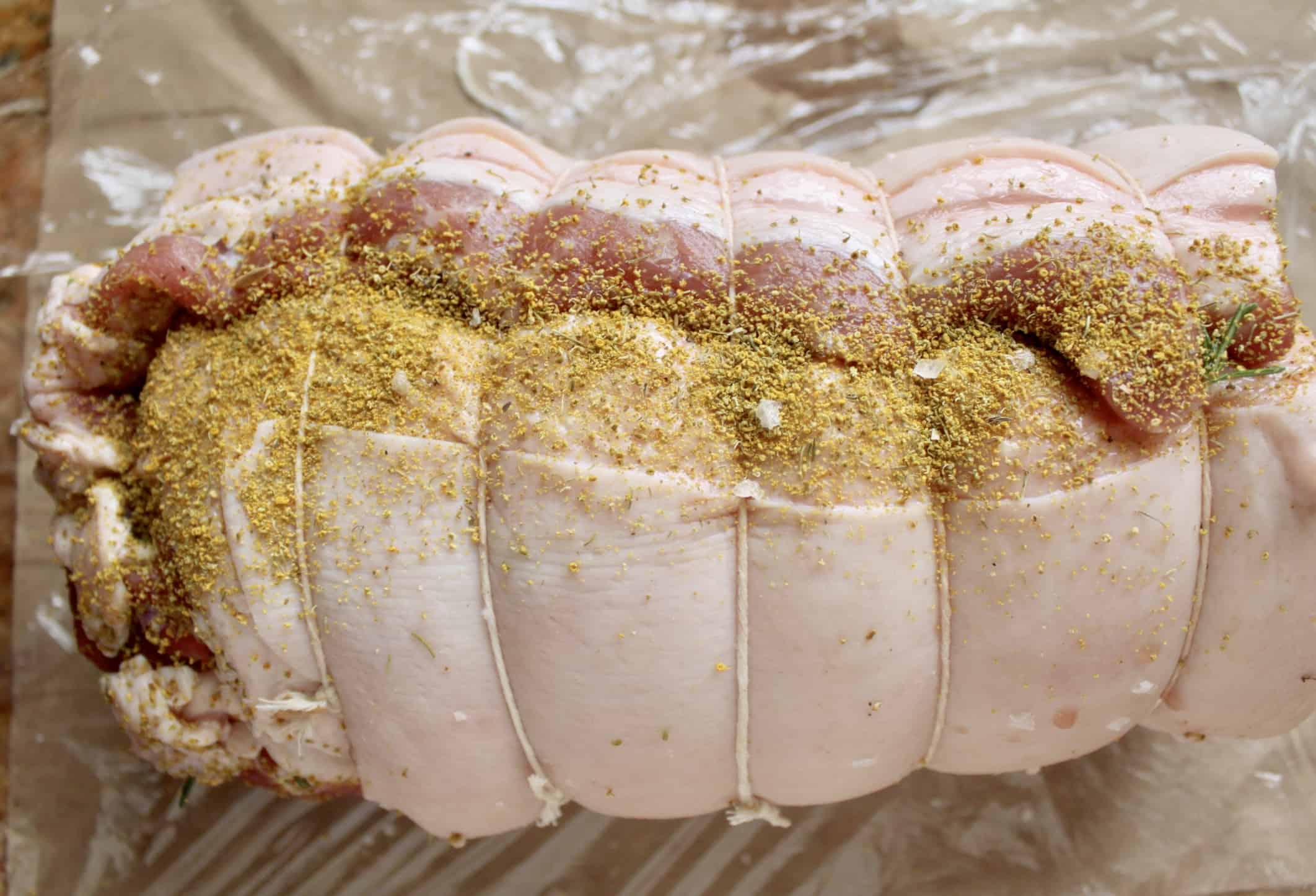
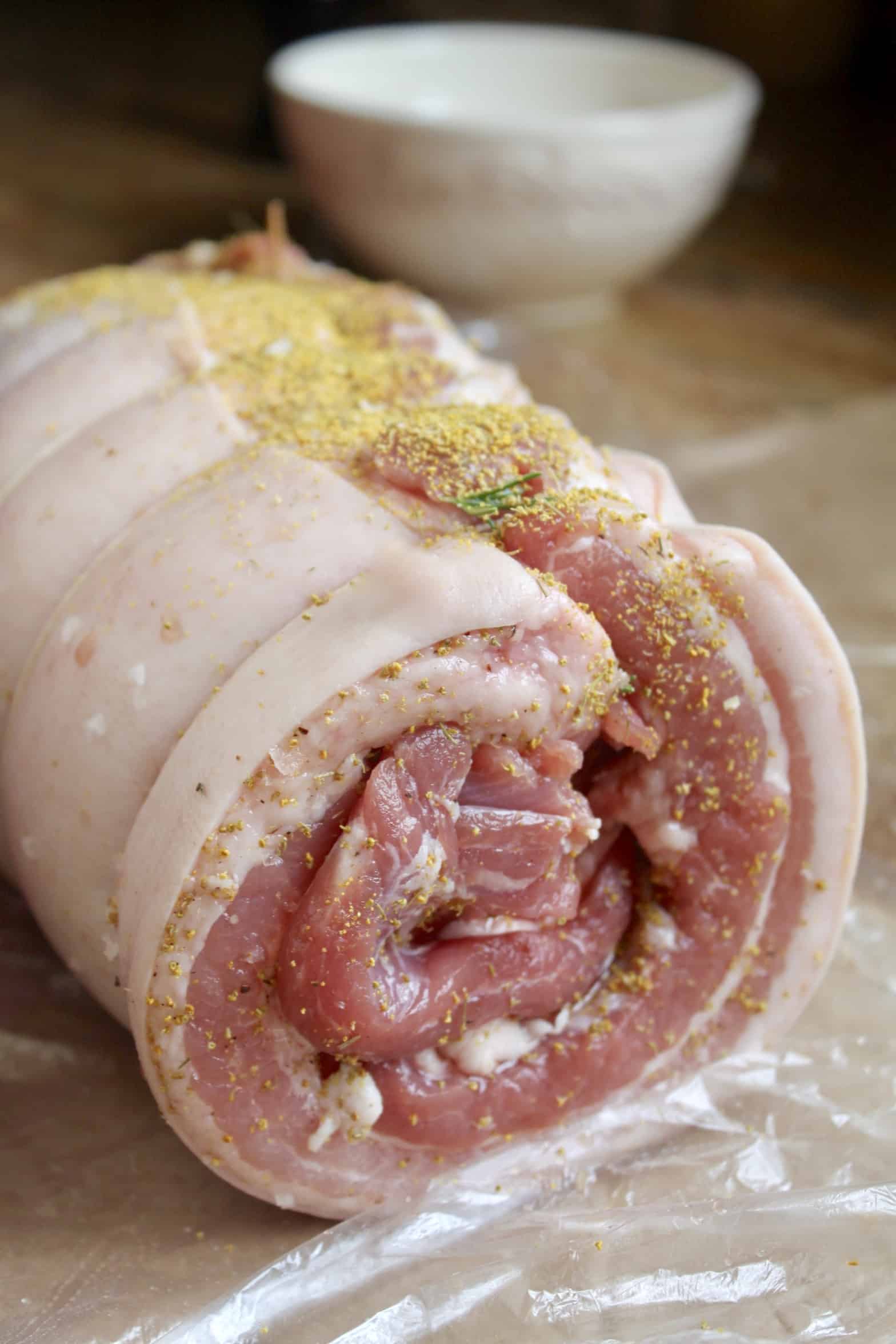
Turn the roast seam side up and add more seasonings, including the rest of the fennel pollen to the non-skin parts of the pork which are exposed (including the ends).
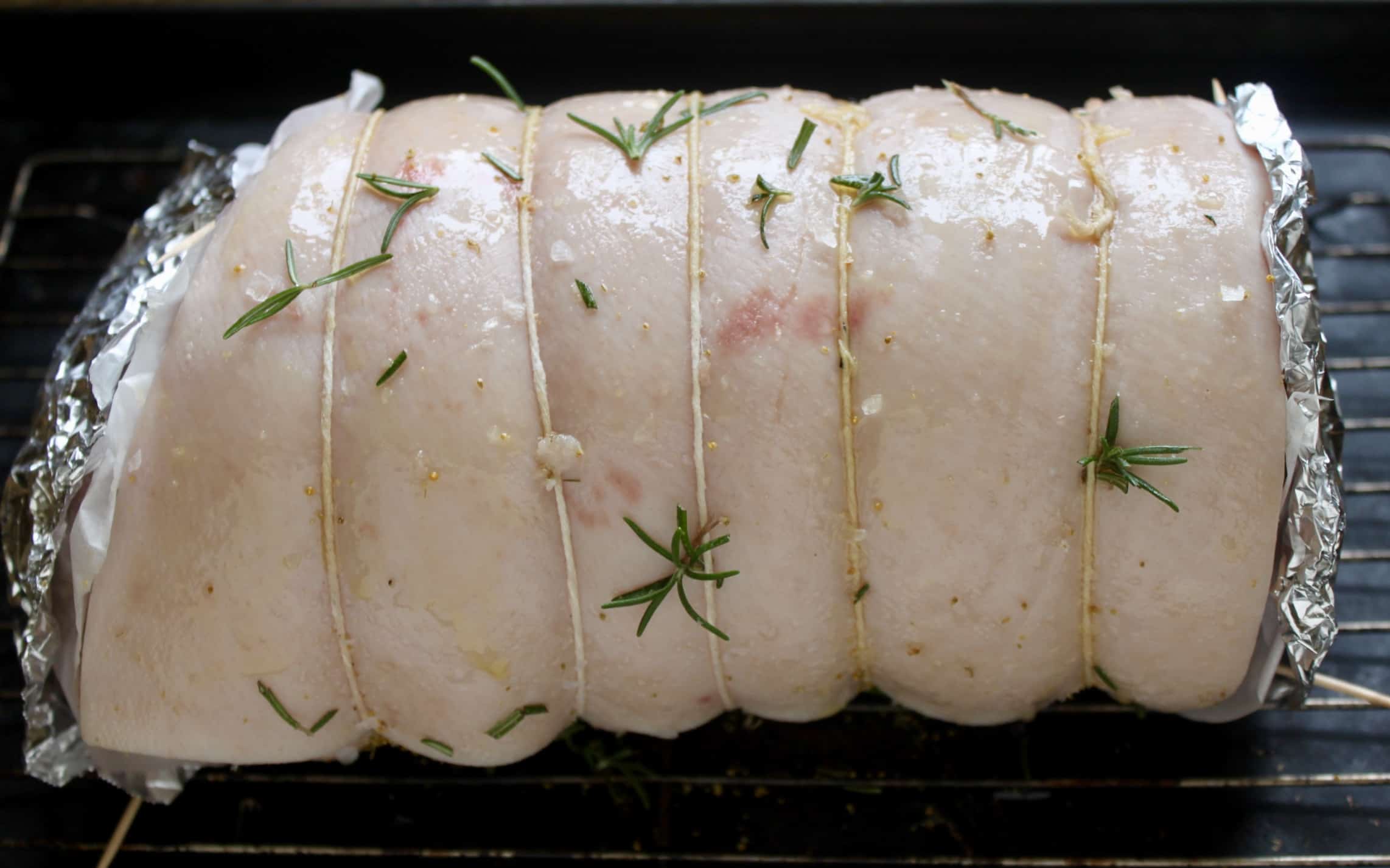
Place seam side down on a rack on a roasting pan or baking tray. Cover the ends with aluminum foil and secure with toothpicks.
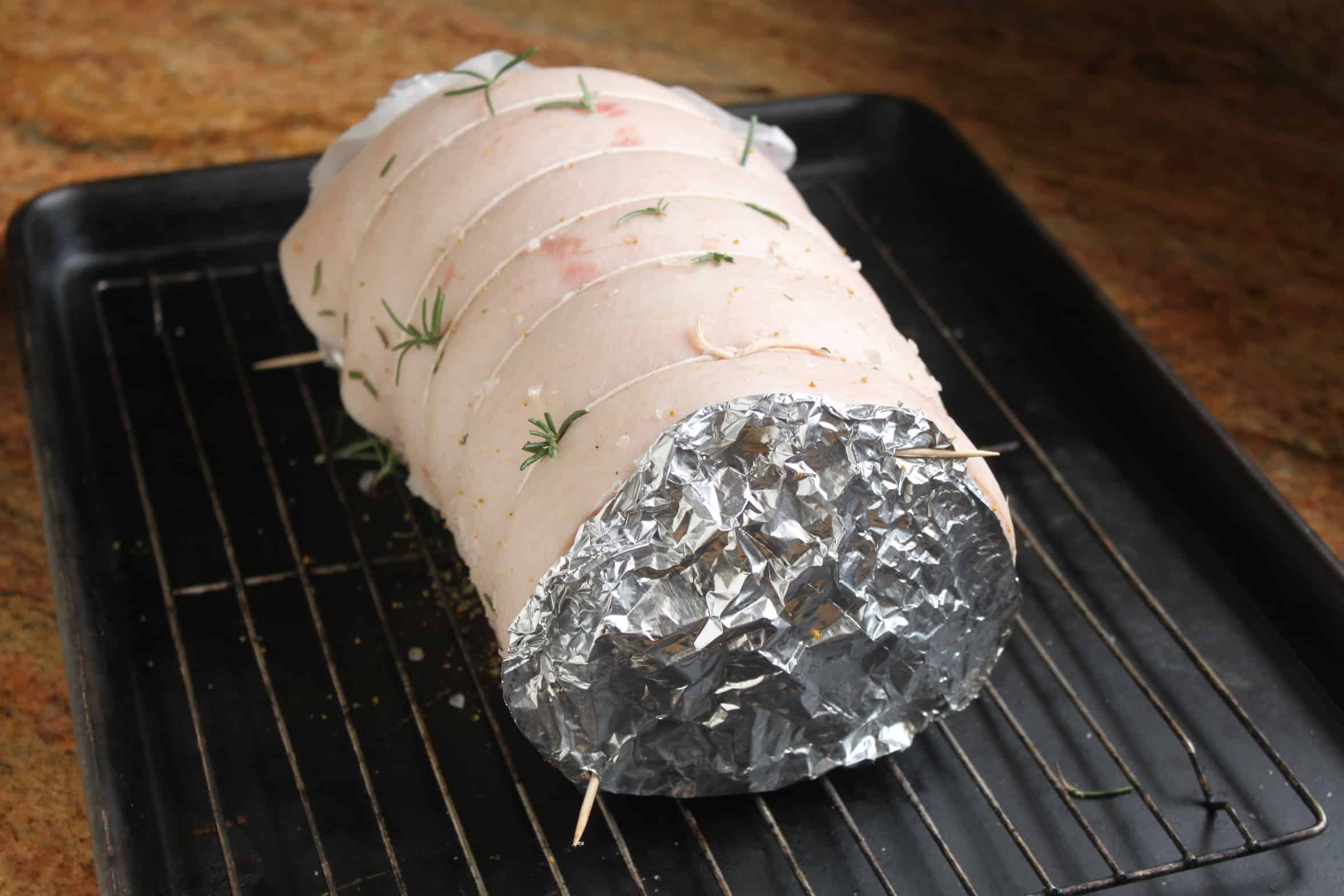
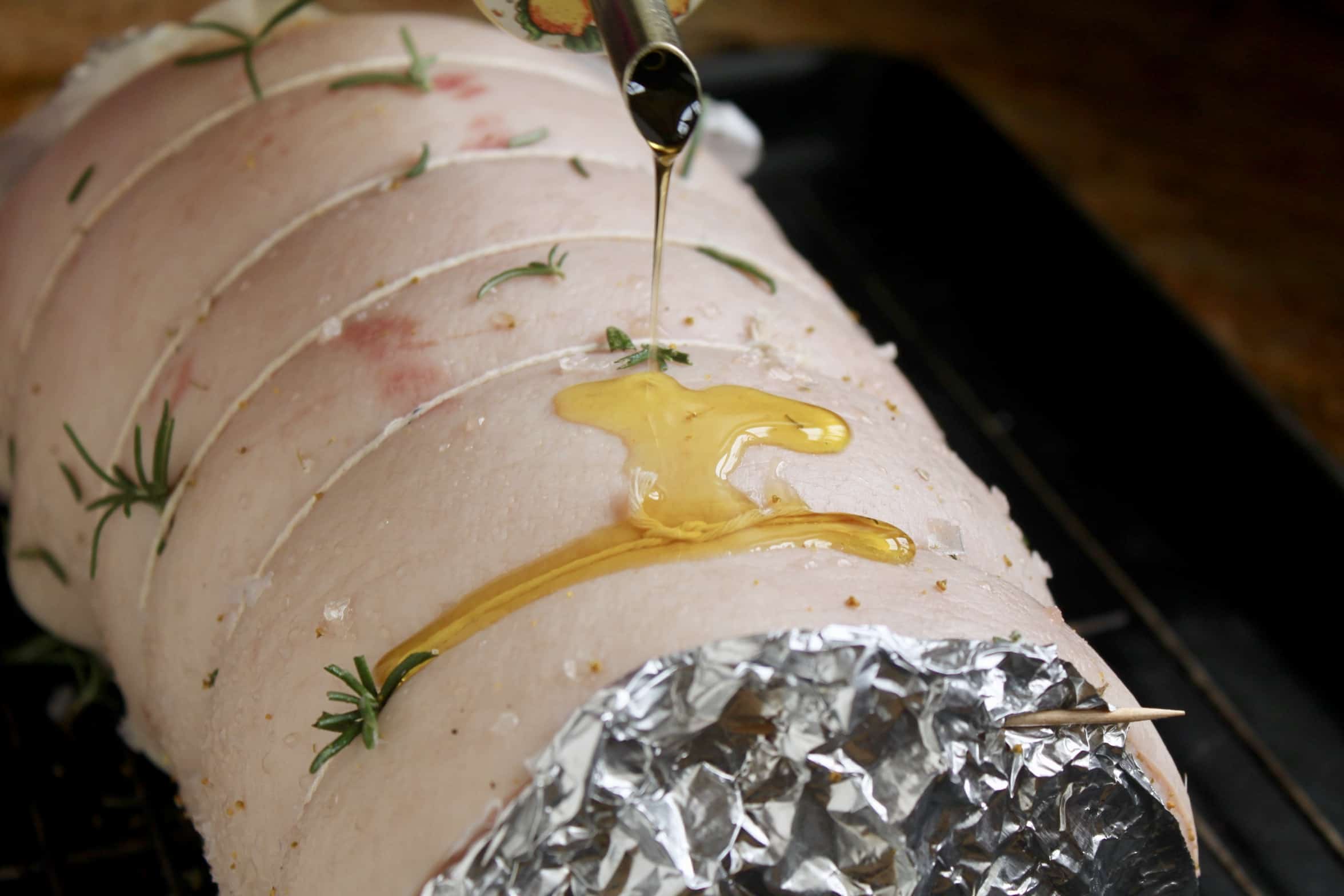
Drizzle with olive oil and rub all over the skin with your hands. Sprinkle with more salt and rosemary.
Preheat the oven to 400˚F (200˚C).
Rest and Serve
Place in the hot oven when it comes to temperature and roast for 1 hour, then lower the temperature to 350°F (170°C) and continue to cook for about another 2 hours. Check the center of the roast when it reaches 170°F (76°C) remove from the oven. Take the foil off the ends and place on top of the porchetta, and allow to rest for about 10 minutes on a cutting board.
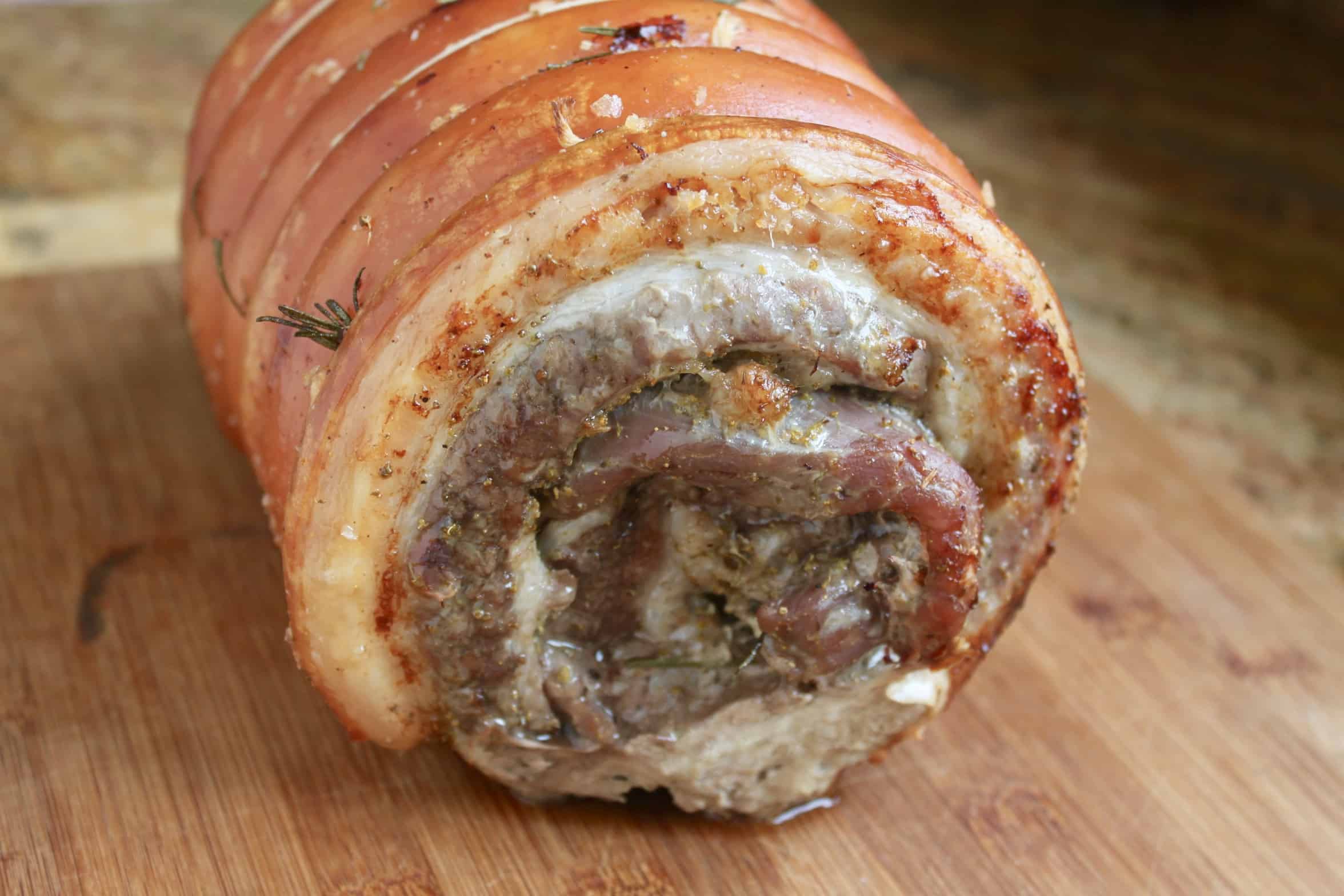
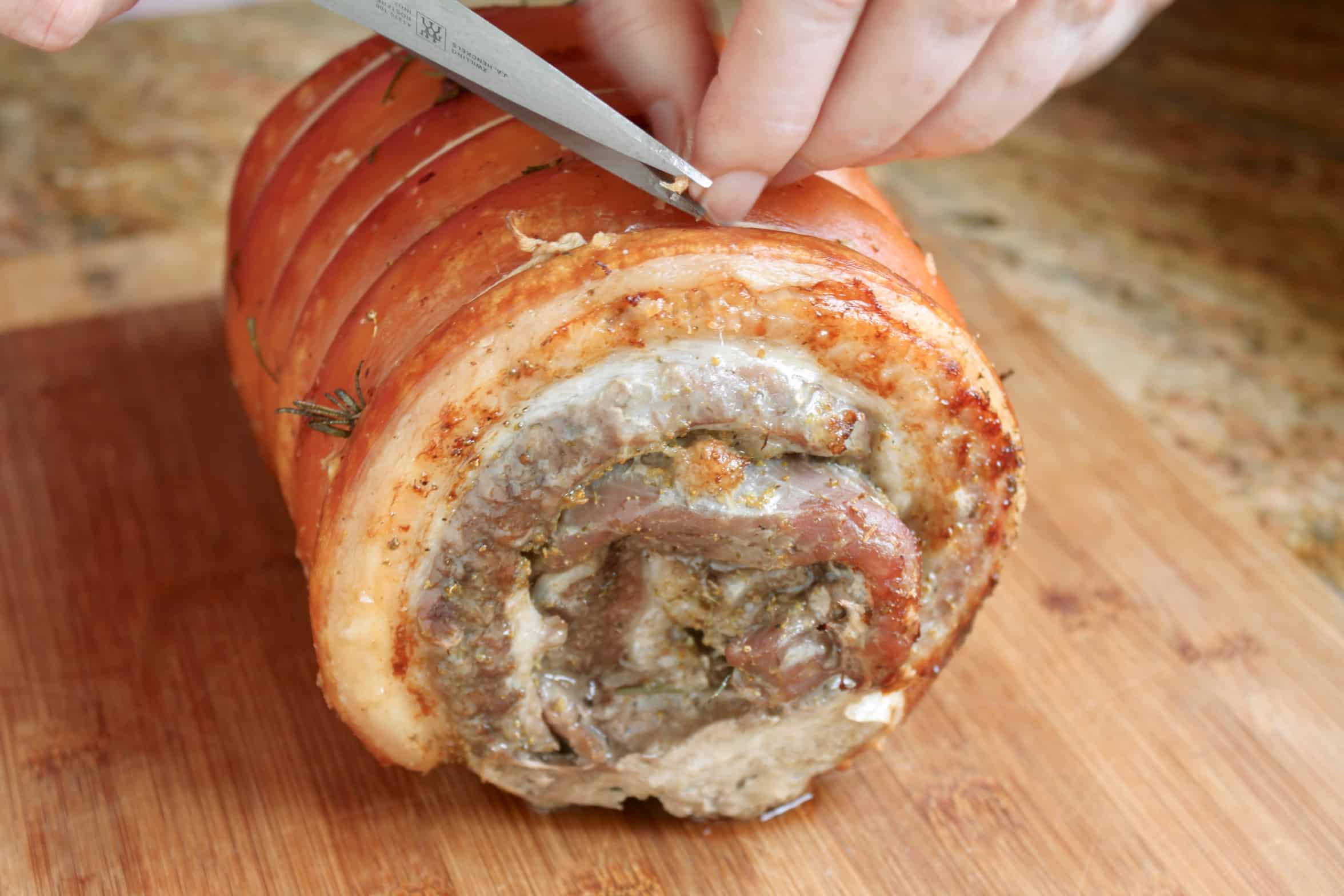
Using a sharp knife, remove one or two of the pieces of twine.
Cut into slices and serve on crusty Italian rolls, or bread, Italian style!
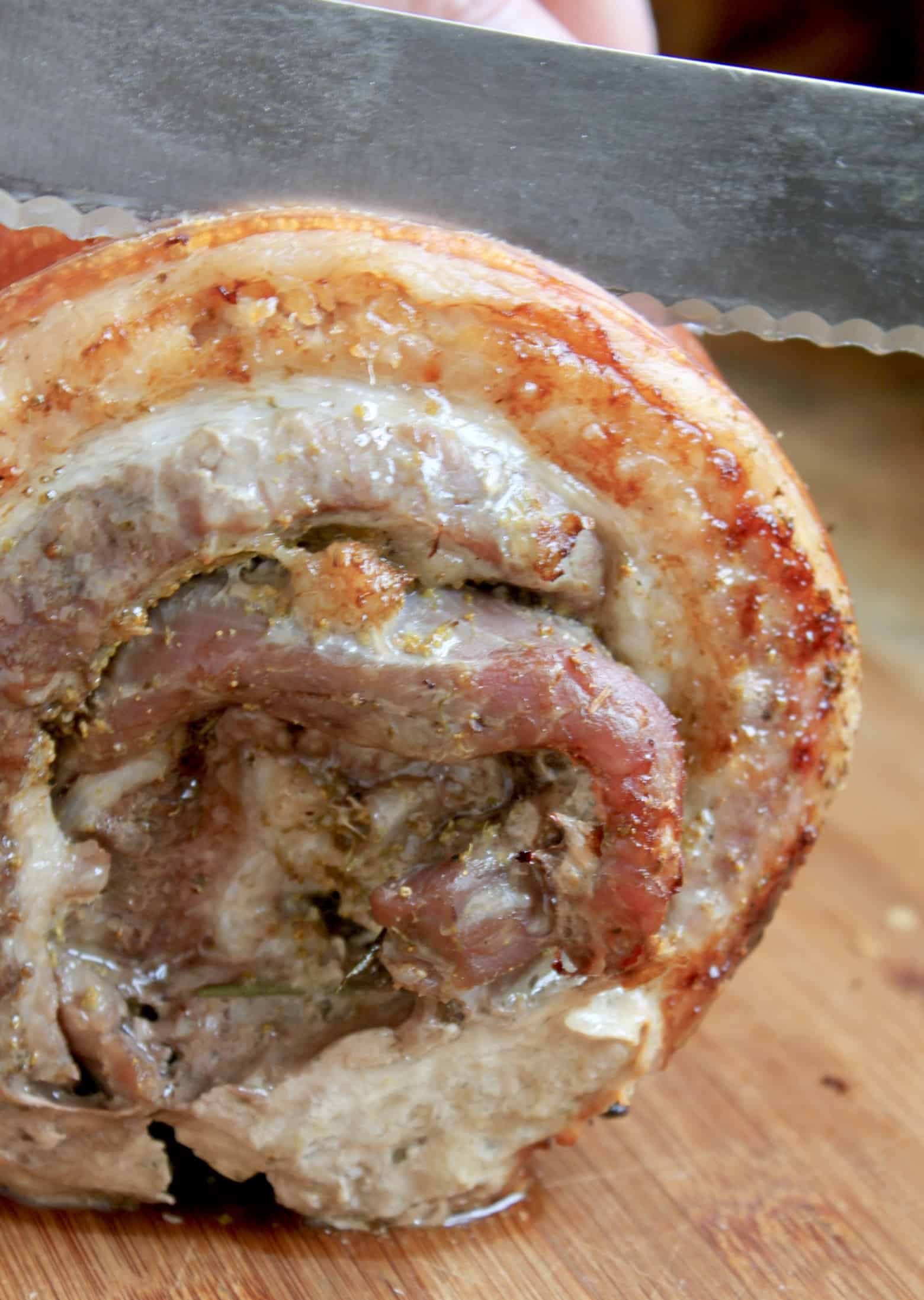
Buon appetito!
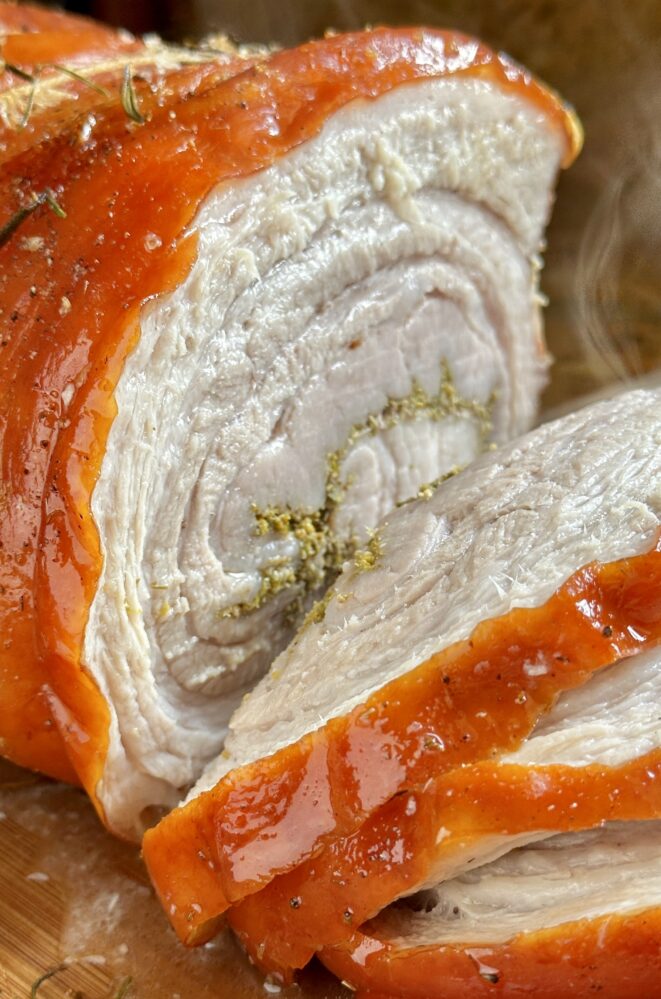
If you make this, please let me know in the comments below, or click on the stars (hopefully the 5th) to leave a review! Thank you!
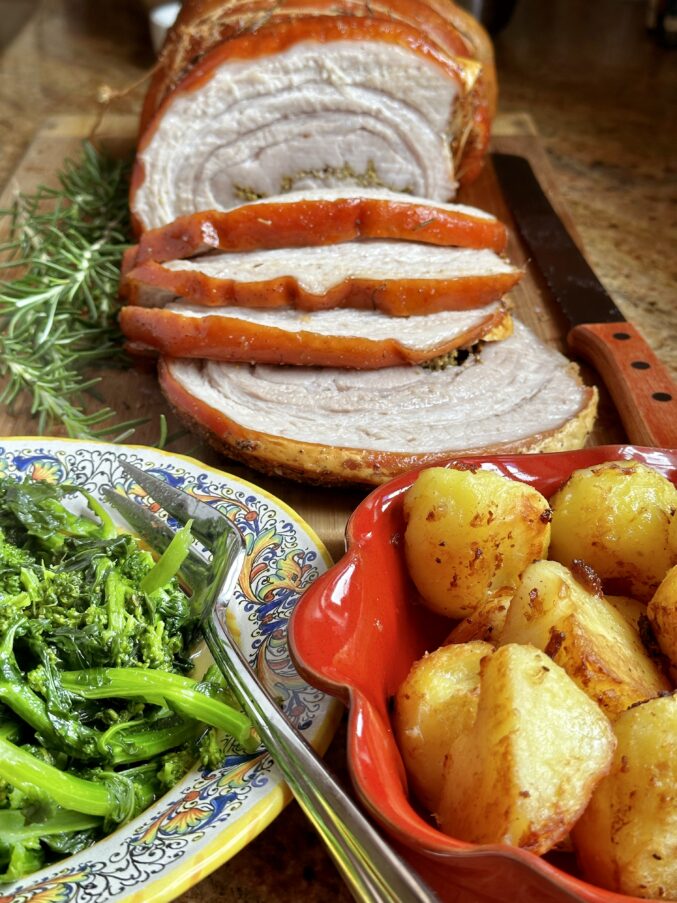
Can I Freeze Leftover Porchetta?
Of course, porchetta freezes well, just as any other cooked meat. Keep it airtight, wrapped well (like in freezer paper) and keep frozen for up to two months. Keep leftovers which won’t be frozen in the fridge for up to two days.
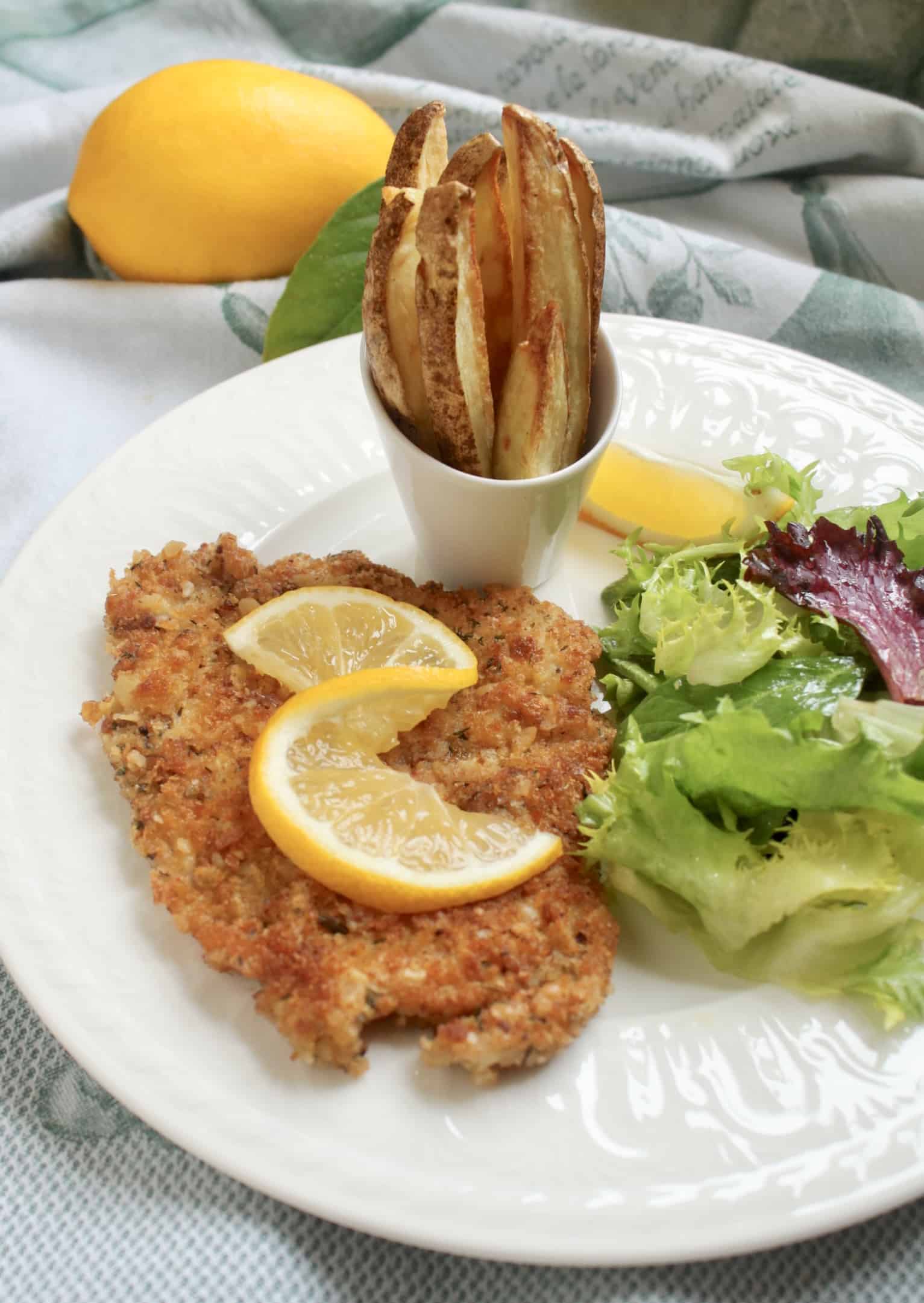
Try my pork schnitzel recipe, too!
Sign up for my free subscription and never miss another post!
Porchetta (Authentic Italian Pork Roast)
Ingredients
- 8 lbs porchetta roast fresh, with skin (up to 10 lbs)
- 3 Tbsp sea salt I used Maldon (see notes on amount of salt) You can also use Diamon Crystal Kosher salt (no other brand is recommended)
- 3.5 oz fennel pollen (do not use ground fennel) see notes
- 3 cloves garlic fresh, finely chopped (omit, or use more as desired) or crushed
- 2 tsp black pepper freshly ground
- 5 Tbsp rosemary fresh (use less if using dried rosemary)
- 4 Tbsp extra virgin olive oil good quality
Instructions
Prepare the Porchetta
- Open the piece of pork onto the butcher paper or clean countertop, skin side down.
- Sprinkle generously with about 2 tablespoonfuls of salt, then work the salt into the pork.
- Next, add the rosemary and crushed garlic. We used fresh rosemary as I have a bush in my garden. Whether you use dry or fresh, rub it and crush it between your fingers to release the flavor and/or oil. Rub the garlic over the porchetta.
- Now add the fennel pollen. Sprinkle evenly over the pork, but save a little of the pollen for after the porchetta has been rolled.
Roll the Pork Belly and Tie it.
- Roll the pork belly tightly, but as you roll it, sprinkle some salt onto the unseasoned pork. Continue rolling until you reach the end.
- Keeping the seam side down, start tying the pork. Another pair of hands will make this part immensely easier. There's no need for fancy ties or sailors' knots, just wrap, double knot and cut, unless you prefer another method.
- Repeat every few inches. The goal is only to keep the porchetta closed, so don't tie it too tightly, either. As you can see, ours is far from perfect, but unless you're serving the Queen of England, it won't matter.
Finish the Preparation and Roast.
- Turn the roast seam side up and add more seasonings, including the rest of the fennel pollen to the non-skin parts of the pork which are exposed (including the ends).
- Place seam side down on a rack on a roasting pan or baking tray. Cover the ends with aluminum foil and secure with toothpicks.
- Drizzle with olive oil and rub all over the skin with your hands. Sprinkle with more salt and rosemary.
- Preheat the oven to 400˚F (200˚C).
- Place in the hot oven when it comes to temperature and roast for 1 hour.
- Lower the temperature to 350°F (170°C) and continue to cook for about another 2 hours. Check the center of the roast when it reaches 170°F (76°C) remove from the oven. Take the foil off the ends and place on top of the porchetta, and allow to rest for about 10 to 15 minutes.
- Using a sharp knife, remove one or two of the pieces of twine. Cut into slices and serve on crusty Italian rolls, or bread, Italian style!
- Buon appetito!
Notes
- PLEASE NOTE: amounts are only suggested for most of the ingredients! If you use a very salty-salt, you will need less salt than using Maldon (which is not a very salty-salt.)
- Be careful about which fennel pollen you purchase. I found one on Amazon which labeled as pollen, but is actually ground fennel seeds! This will ruin your porchetta! If it is inexpensive, it is probably not good quality fennel pollen. The brand I link to is one I have used, and is reliable, as is Dario Cecchini’s brand (the most famous butcher in Italy.)
- If you can, use more fennel pollen than suggested. You can see from the photo in Orvieto, they use a lot. The reason I have 3.5 oz is because one package of fennel pollen will make 2 porchette. However, if you can afford to use 7 oz in one roast, I recommend it.
- Originally, I was told there was no garlic in the porchetta, on my second visit they said it did have it so I’ve adjusted the recipe.
Nutrition
Here’s a twist on a pork tenderloin roast with persimmons and prosciutto from my friend, Valentina!
Christina’s Cucina is a participant in the Amazon Services LLC Associates Program, an affiliate advertising program designed to provide a means for sites to earn advertising fees by advertising and linking to Amazon.com.
Hi Christina, your recipe looks amazing, I’m planning to cook it at Christmas this year. I have 25 people for dinner, what size/weight should feed them all. It will be the main coarse for dinner along with roast potatos and salads, can you please recommend a sauce to accompany it. Thanks Angela
Hi Angela, you should estimate at minimum ½ lb per person (raw) for so I would say if you’re also having appetizers, and/or soup your sides and dessert, a 15 lb porchetta should be sufficient. Of course, if you don’t want to risk it go to 18 or even 20 if you definitely want leftovers, even more. Regarding the sauce, there is no sauce that should ever be served with porchetta. However, to each his own, so if there’s something you truly like, go for it. If you read my post, you’ll understand why porchetta is amazing on its own. Merry Christmas!
Thank you Christina, you are so right, no sauce required for this recipe, it will be great on it’s own. Thanks for your reply. Merry Christmas!! Cheers Angela
thanks alots !
I found this and this website looking to re-create the amazing sandwich I had in Italy. Mission accomplished and this site is also a treasure. This recipe took the neighbors and I back to one of the most pleasurable sandwiches ever. Thanks.
Awww, mille grazie, Michael! You made my day! Hope you find more of my recipes to enjoy!🥰 (That said, for many of the recipes, they’re not truly mine; I’m more of the messenger, and I may tweak the message a bit!)
This is such an incredible recipe, i’ve made it many times in the last three years and its a winner every time. She is right, use the fennel pollen! its essential.
Planning to make this for Thanksgiving, can’t wait! But curious about your comment below, that I copied from above, regarding garlic. It features heavy into your recipe but it seems like you are saying that it doesn’t belong in it. Am I missing something?
Thanks!
NB: don’t be tempted to add garlic. This is speculation on my part, but I think garlic is more of an American Italian addition. I’ve never tasted garlic in porchetta in Italy, however, it might be used in some other areas where I’ve not visited (but then they’re not famous for their porchetta). It definitely wasn’t in the porchetta from Orvieto,
Ah, I need to update this post. I’ve been back to the butcher since my first time when they told me there was no garlic, and have since told me they DO add garlic. So yes, the recipe is correct as written, I need to update the post. Thanks for catching that! Btw, the porchetta was just as heavenly when I went back the second time!
I just found this recipe and immediately want to try it. I need to order the fennel pollen, but I wanted to verify the amount with you. 100grams of fennel pollen is $50 where I live. Please advice.
Yes, Iris it is correct. Sadly, more would be great, but most of us cannot afford it. Try ordering online.
where does the garlic go ?!
Sorry, in with the rest of the ingredients, it’s now fixed, Laurie.
When you slice the finished roast, do you leave the crispy skin on in the sandwich? Or cut the crispy skin off?
I leave it on because we all love it (fight for it!), but I know in Italy they usually have the skin off to the side because some people won’t want it and others love it and can ask for extra! You can do it however you prefer, but please don’t tell me if you throw it away! :(