

Poolish (Easy Recipe for Your Best Pizza, Ever)
Poolish is an easy to make, pre-fermented dough that turns your regular pizza dough into one that’s lighter, tastier, healthier, and easier to digest. Learn just how easy it is to make using only 3 ingredients!
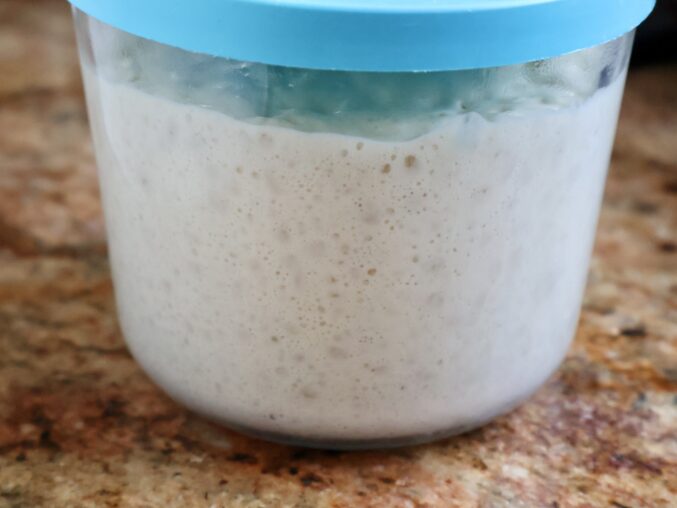
I’m not joking when I say this poolish recipe is a life changer.
As an Amazon Associate I earn from qualifying purchases.
If you’re a long time reader, you’ll know I’m a big fan of pizzaiolo Maestro Vito Iacopelli’s homemade Neapolitan pizza dough recipe.

It’s the best pizza dough I’ve ever made at home, and I’ve been making pizza almost my whole life. However, the single most important step in that recipe, and the one that people sometimes skip (because it requires planning ahead), is the poolish. The saddest part is that poolish makes all the difference in the world when it comes to pizza dough: if you’re guilty of skipping this step, you’re really missing out!
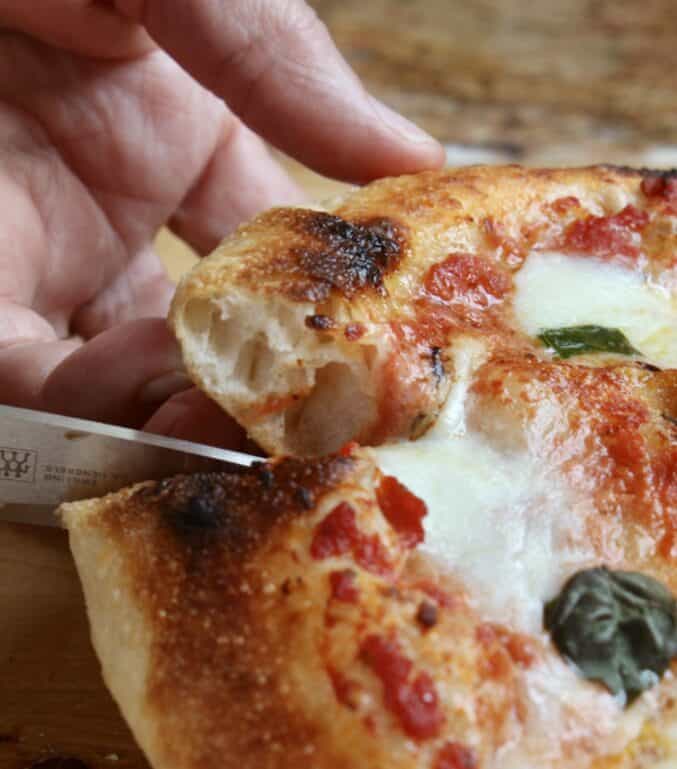
Try this simple focaccia recipe, too.
What is Poolish? (And Why Does it Makes the Best Pizza Dough?)
A poolish is a type of pre-fermented dough, sometimes called a preferment or a wet starter. It’s a mixture of equal parts flour and water (by weight) combined with a very small amount of yeast, and left to ferment slowly (usually for 16 to 24 hours in the refrigerato) before being used to make the actual pizza dough, focaccia dough or bread dough.
The word “poolish” is actually French (the technique is believed to have been brought to France by Polish bakers in the 19th century, hence the name), but it has long been used by Italian pizza makers and bakers across Europe. –Wikipedia When Vito makes his pizza dough, poolish (or biga–that’s for another time) is the beginning for the most incredible results.
Why Use Poolish?
The short answer is: flavor, texture, and digestibility. Those are three biggest factors when it comes to pizza dough. If you’ve ever bitten into a slice of pizza in Naples and wondered why it tastes nothing like pizza back home, poolish is almost certainly part of the answer.
When flour and water ferment slowly over many hours, the yeast and naturally occurring bacteria begin breaking down the starches so giving your stomach and digestive process a head start. The almost sourdough-like flavor in a really good Neapolitan pizza crust is due to this pre-fermentation.
The slow fermentation also changes the gluten structure of the dough, making it easier to shape (you won’t be fighting to stretch the dough), and it’s far more digestible. This is why people who find regular pizza dough heavy or have bloating afterwards, often have no trouble with a properly fermented dough. It’s the poolish, and it’s been perfected in Naples and Southern Italy by generations of pizzaioli.
Note: poolish even extends the length of time your dough stays fresh!
How to Make a Poolish Recipe
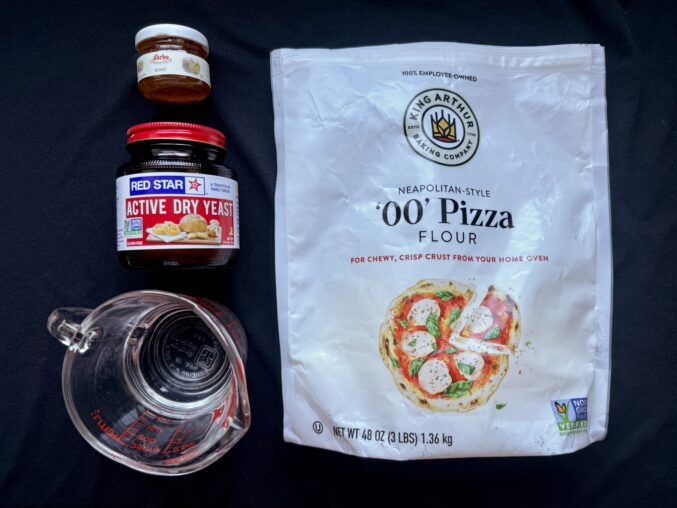
Making poolish could not be simpler. You only need three ingredients (plus water) and about two minutes of hands-on time. What you do need is just a bit of pre-planning.
Here’s the basic poolish recipe I use for Vito’s pizza dough (full quantities with the complete pizza dough recipe here.)
The day before you want to make pizza, combine the water, 00 flour, a small amount of dry yeast, and just a touch of honey in a small glass or plastic container (try not to use the latter as flavor can transfer into the poolish.) Stir until everything is evenly combined with no dry lumps. Leave it at room temperature for one hour, then cover and place in the refrigerator for 16 to 24 hours.
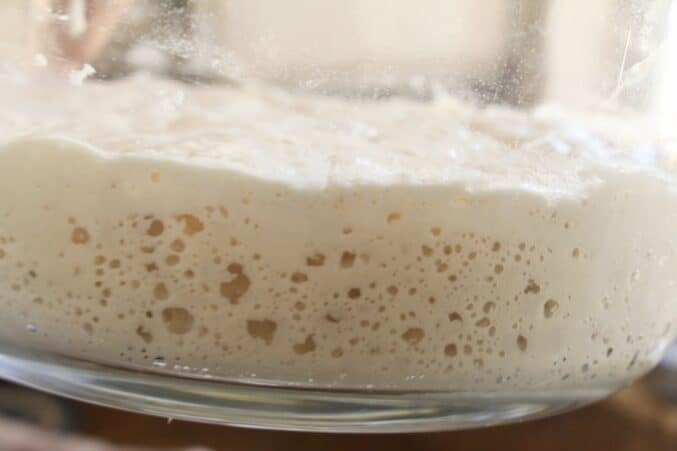
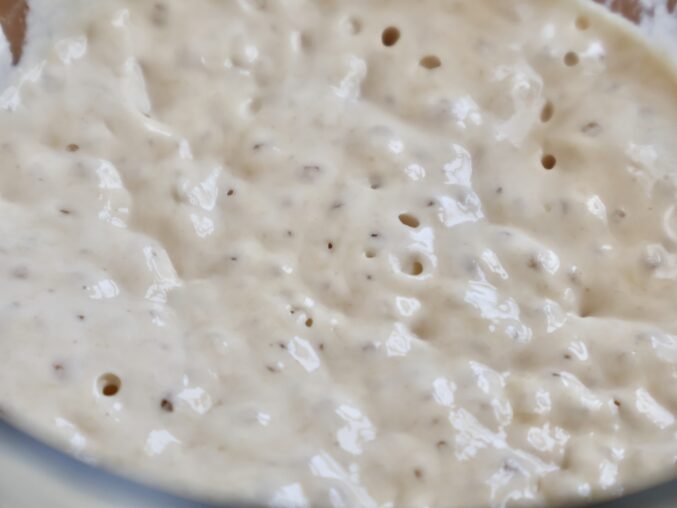
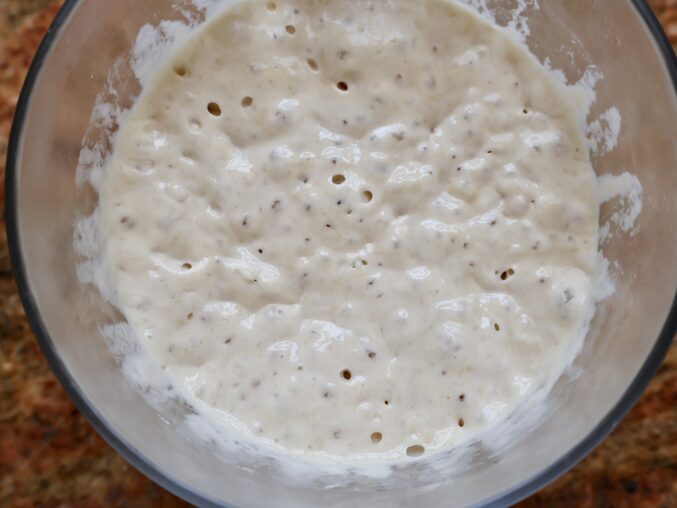
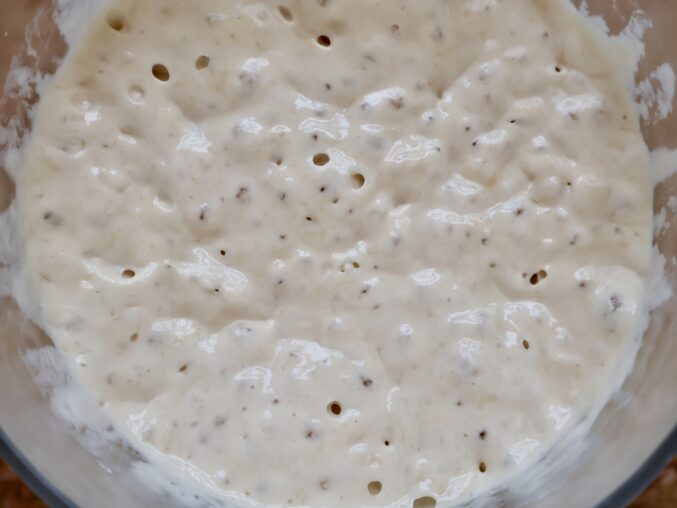
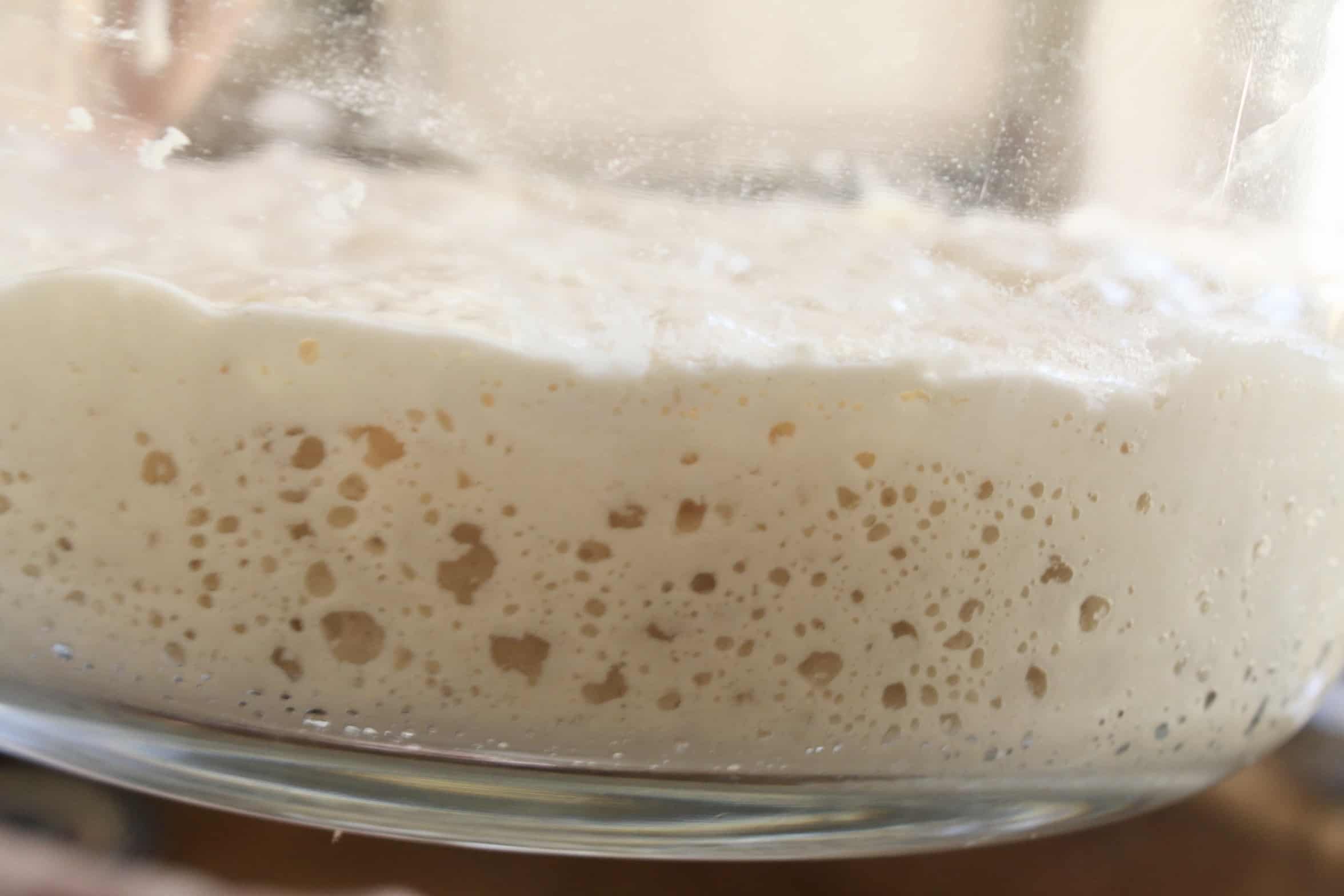
That’s it. When you take it out the next day, it should look bubbly, slightly domed, and smell wonderfully yeasty and slightly tangy (see the photo above.) That’s exactly what you want.
Tips for Perfect Results
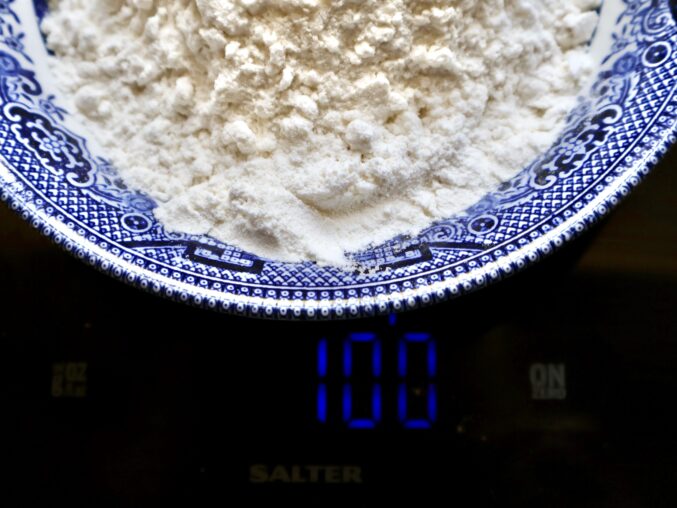
- Use a kitchen scale, not cups. This matters even more for poolish than for other recipes. The ratio of water to flour needs to be accurate for proper fermentation. I won’t be sharing this recipe in cups because a scale is absolutely necessary for the poolish to work. I don’t want bad reviews because people will use cups and then say it doesn’t work. Neapolitan pizzaioli do not use cups and neither should you.
- 00 Italian flour gives the best result. It’s finely milled, lower in protein than bread flour, and produces that characteristic soft, chewy, slightly crispy Neapolitan crust: or as Vito says, it’s “soft and crunchy!”
- Don’t skip the honey. It’s only a tiny amount, but it gives the yeast an initial boost and Vito knows what he’s doing!
- If it’s a hot summer day, place the poolish somewhere a bit cooler for the first hour as it can rise too quickly if it’s really warm.
- You can use the poolish straight from the fridge; there’s no need to bring it to room temperature before adding it to your dough.
Can I Use Poolish for Bread, Too?
Yes! Poolish isn’t just for pizza. Many artisan bread bakers use it as well, particularly for baguettes, focaccia, and ciabatta. Anywhere you want a light, open structure with great flavor and a fabulous crust, poolish helps. Once you start using it, it’s hard to go back to same-day dough. And if you see any recipe like “one hour pizza dough”–RUN!!
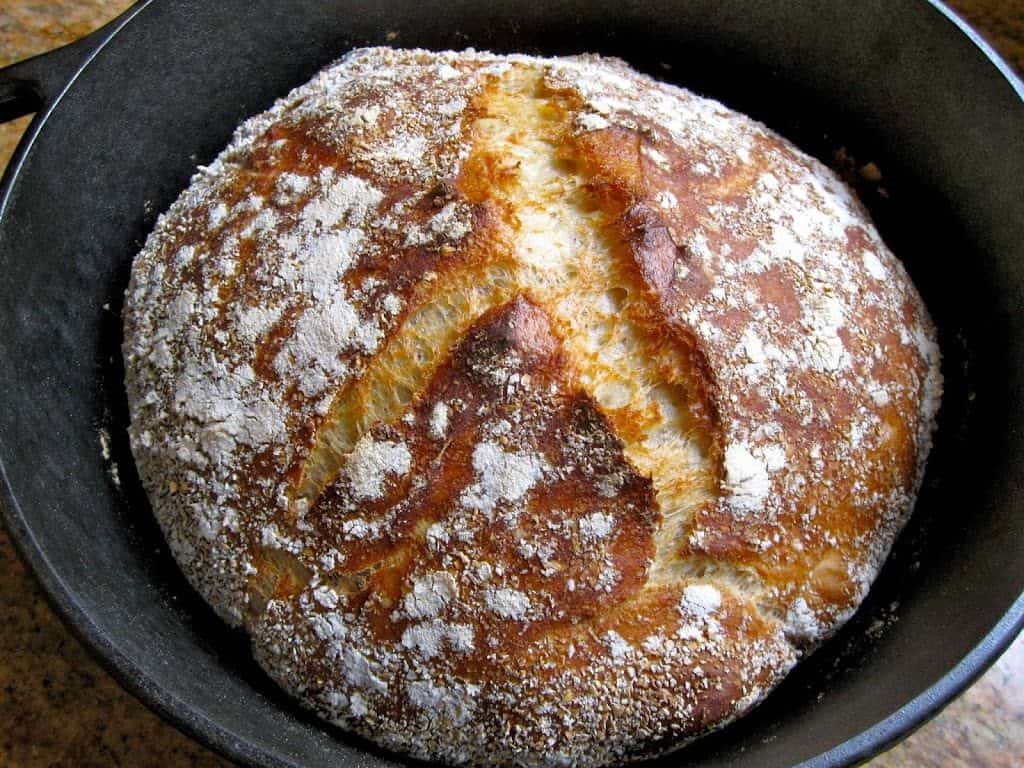
This loaf isn’t made using poolish, but it’s still a slow rise method (no knead bread recipe.)
Don’t Miss out on Your Opportunity to Start Making Better Pizza and Bread!
If there’s one upgrade you can make to your homemade pizza, it’s this: start the day before with poolish. It takes two minutes of effort and 16-24 hours of patience, and the results are extraordinary. Your crust will have flavor, texture, and a lightness that same-day dough simply cannot match.
Have you tried using a poolish in your pizza dough or bread? I’d love to hear how it went — leave a comment below and let me know! And if you haven’t already, do subscribe so you never miss a new recipe.
Poolish Recipe
Recipe from Vito Iacopelli Makes enough poolish for 5 pizzas
FULL PRINTABLE RECIPE BELOW
Ingredients
- 00 flour
- (water – try to use filtered or bottled water)
- dry yeast (or fresh)
- honey, good quality
Directions
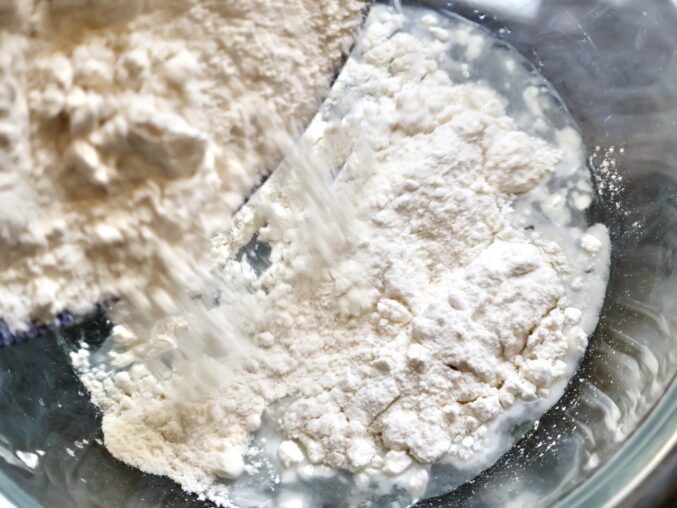
Put the water in a bowl or jar which has enough room for the poolish to expand, then add the flour.
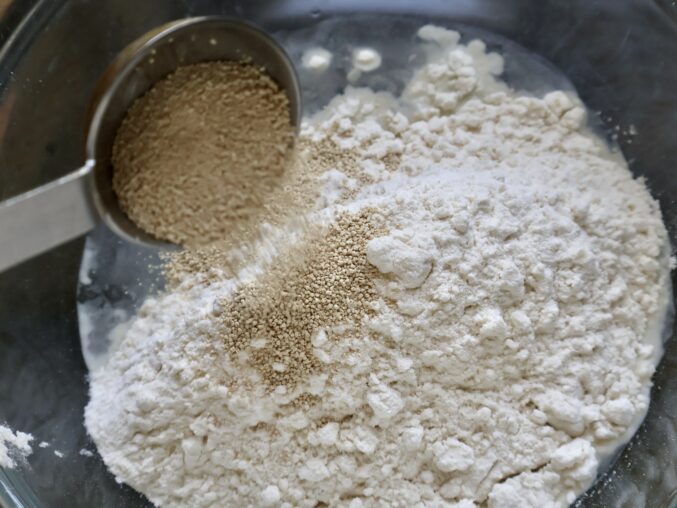
Next, add the yeast.
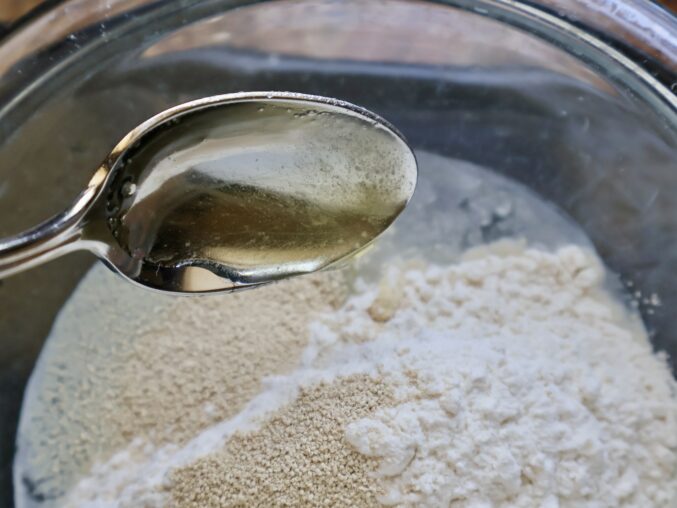
Then add the honey.
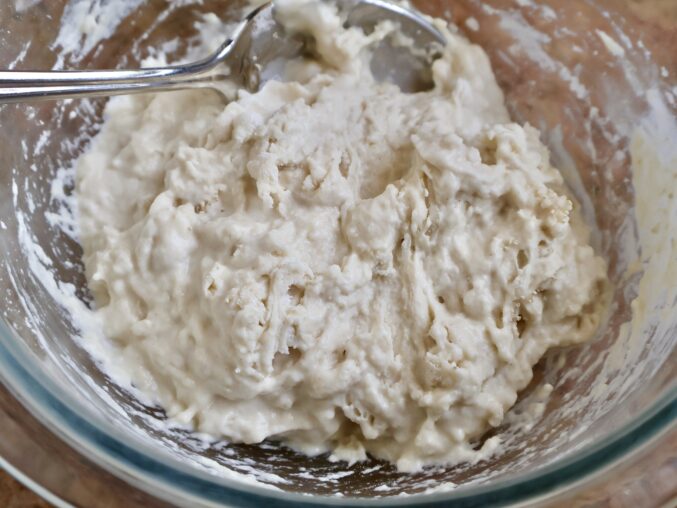
Mix just until it all comes together in a rather sloppy, scraggly way. Don’t overmix it.
Cover and leave at room temperature for one hour.
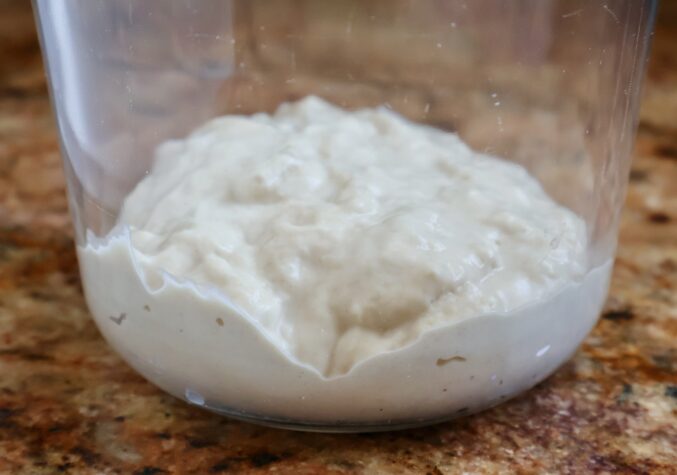
After an hour, place in the refrigerator for 16 to 24 hours. It will rise and bubble, which is exactly what is supposed to happen. Here’s the Neapolitan pizza recipe to use this poolish, which includes the authentic Neapolitan, no cook pizza sauce recipe, too!
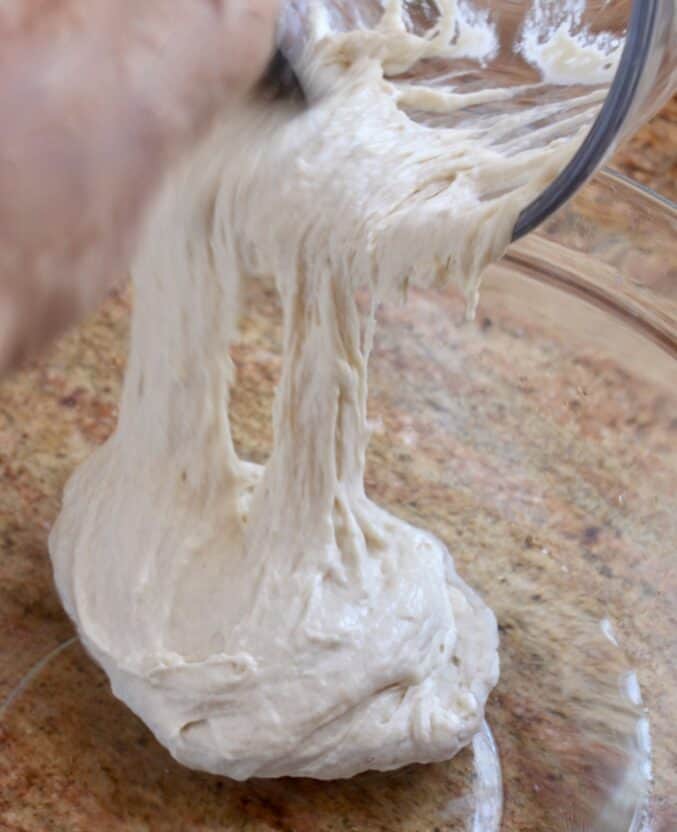
Use as desired to make pizza, bread or focaccia, for example.

Sign up for my free subscription and never miss another post!
Poolish
Special Equipment
Ingredients
- 100 ml water try to use filtered or bottled water
- 100 g 00 Italian flour double zero flour (best for pizza-making, and I highly recommend it) or all-purpose or bread flour
- 1 tsp dry yeast
- ½ tsp honey
Instructions
- Put the water in a bowl or jar which has enough room for the poolish to expand, then add the flour.
- Next, add the yeast, and the honey.
- Mix just until it all comes together in a rather sloppy, scraggly way. Don’t overmix it. Cover and leave at room temperature for one hour.
- After an hour, place in the refrigerator for 16 to 24 hours. It will rise and bubble, which is exactly what is supposed to happen. Use as desired to make pizza, bread or focaccia, for example.
Notes
- Please don’t ask me for measurements in cups as I won’t supply them for this recipe. IT IS CRITICAL TO USE A SCALE to have good results.
Nutrition
Christina’s Cucina is a participant in the Amazon Services LLC Associate Program, an affiliate advertising program designed to provide a means for sites to earn advertising fees by advertising and linking to Amazon.com.
This makes the most incredible pizza dough, what a difference it’s made. Will be hard to make anything else! Thank you for sharing.
i am punjabi but addicted to napoli style pizza, will definitely try it and thanks for sharing
Wonderful! Let me know how you like it!
Can poolish be use in donut recipes?
YES Linda! Here you go!
This post has me fully convinced to stop being lazy about my pizza dough, the way you break it down makes it feel so doable, and honestly, the promise of that light, bubbly, Neapolitan‑style crust is enough motivation on its own. I’ve definitely been guilty of cup‑measuring my way into mediocre dough 🤣This is exactly the kind of nudge I needed to level up my pizza game.
What a great tutorial, Christina! I have to admit I often neglect to make a biga when I make pizza. As you say, it requires some advance planning… But you’ve convinced me it’s worthing thinking a little ahead. Just like remembering to soak baccalà or beans.
Hi Christina, thank you for this poolish recipe, is this something I could make and leave in the fridge until I’m ready to use ?
Also, do you have a recipe for breads or focaccia that uses poolish?
And lastly, do you need to use all the that you make in each recipe?
Thank you
Hi Lou, no you don’t want to leave it longer than 24 hours as it will start to go sour and overproof. Yes, the amount in the recipe is what is needed to make 5 pizzas. Maybe I didn’t make that clear, I will go fix it. Here’s the recipe for the pizza. I will be adding more recipes, but you can go to Vito’s YouTube page and find all his creations. He’s amazing!
Thank you Christina for clarifying
I will definitely check out Vito’s YouTube channel, I made his hamburger buns which were absolutely amazing!